hotelvak.be
EN

Platform on hotel management, interior design and design in Flanders
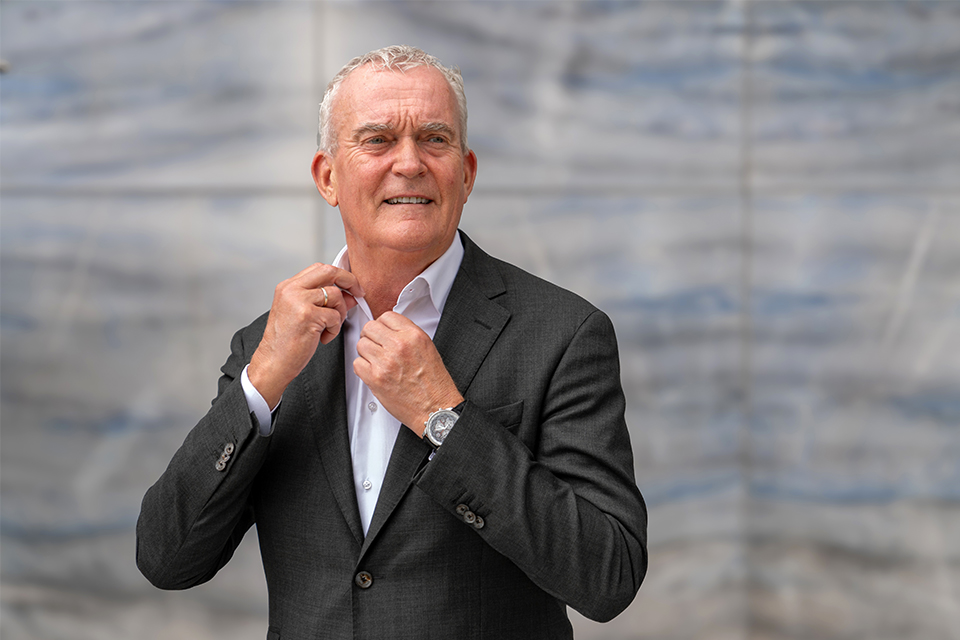
After almost 37 years in the hotel industry, I am saying goodbye to daily hotel life this summer. At 29, I took charge of a hotel for the first time, and soon I will be stepping down as General Manager of the Bilderberg Parkhotel Rotterdam. Not because I'm tired of the profession, quite the contrary. I may still consider this the finest profession in the world. But it is a profession in which you are always ‘on’. And after all these years, this feels like a good moment to make a bit more room for other things.
I prefer to call myself an innkeeper rather than a hotel manager, by the way. That might sound a bit romantic or old-fashioned, but for me, that's precisely where the core of hospitality still lies. And that's exactly where the shoe sometimes pinches in modern hotel management. Somewhere along the way, we've lost the soul of the profession a bit. Or more precisely: we've let ourselves be partly optimised away. Fortunately, not everywhere and not always. But more often than we should care to admit.
We are building smarter hotels, more efficient processes, more attractive dashboards and ever-improving systems. We allow guests to check in themselves, check out themselves, order themselves, pay themselves and soon, probably, complain themselves to an AI chatbot that responds “understandingly”. Meanwhile, we call that progress. And it is, partly. Don't get me wrong: you can't get by without technology these days. Margins are under pressure, staff are scarce and the world is changing faster than ever.
But somewhere between the spreadsheets, KPIs, and revenue meetings, something important risks disappearing: the soul of the profession. At its core, a hotel is still a place where people want to feel welcome. Where a guest walks in after a long day and thinks: great, I'm home for a bit. That feeling rarely arises from a perfect system. It arises from people.
By the receptionist who senses someone's having a bad day. By the waiter who just notices a table has been waiting a bit too long. By a housekeeping employee who understands that attention is sometimes more important than speed. Hospitality lies in the details that you cannot automate. Yet in the Netherlands, we've become somewhat uncomfortable with service. As if servitude is something old-fashioned. Or subordinate. While it's actually a profession. A wonderful profession, even. In countries like France or Morocco, they understand that much better. There, good service is something to be proud of. Here, we quickly call it a student job. I find that a shame. Because ultimately, guests rarely remember how efficient your process was. They remember how they felt. That's the real business we're in. I was recently in a beautiful luxury hotel in Italy. Everything was perfect. Beautiful room, marble bathroom, fantastic bed. But after the first night, you had to pay extra for coffee cups in the room. Then I think: guys, somewhere here someone has fallen in love with Excel and forgotten what hospitality is all about. That tension will always remain. Of course, a hotel must be profitable. Of course, the P&L must be healthy. But as soon as the system becomes more important than the guest, we go too far. And perhaps that doesn't just apply to hotels. Look at healthcare, education, actually any sector where people should be central. Everywhere you see the same struggle between efficiency and attention.
Let's embrace technology and give the time it frees up back to our guests. For me, that's the future of hospitality: technology that doesn't get in the way of people, but instead creates space for genuine attention, personal contact, and sincere hospitality.