[00:01] Episode introduction and guest
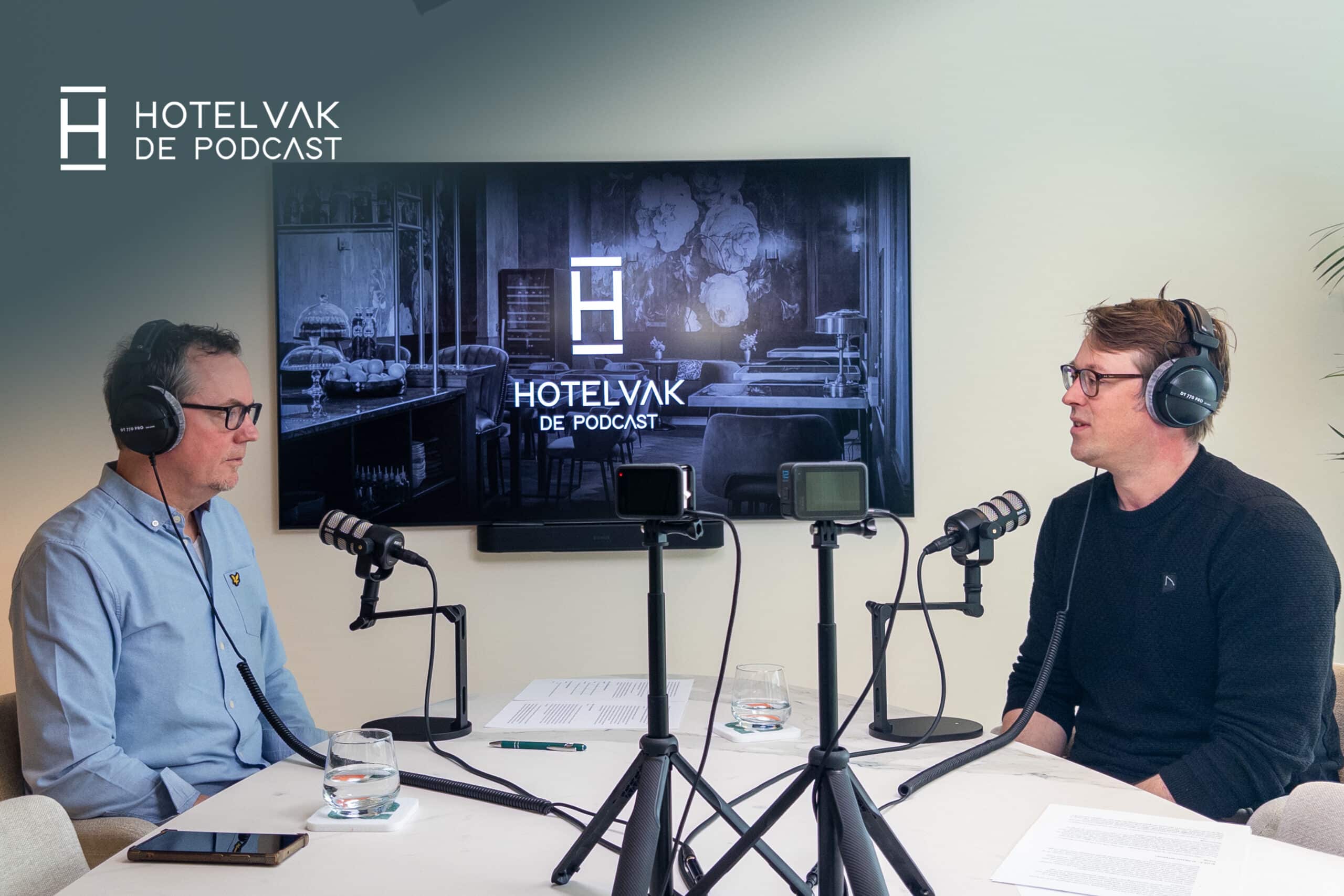
Kris Vandekerckhove: Welcome to Hotelvak, the podcast. Today we have a special episode. We dive into the future of hospitality. A world where technology and humanity are constantly challenging each other. What does hospitality mean today, for example, in an age of chatbots, automation, AI? No one better than Tomas Sergeant for that. IT and marketing manager at C-Hotels group. They have been building striking hotel concepts on our Belgian coast for years, from naysaying Upstairs Hotel to Hotel Silt in Middelkerke, which is actually literally on the beach. There is also De Ostendian, which has been winning awards in the meantime. The first completely new hotel in town in 25 years, set up as a real destination in its own right, where the story of the town is central and each room is linked to an Ostendian. I lobbied to have my grandmother, a true ‘Ostendsche’, put forward as an Ostendian as well, but that was ignored. We will talk about it with Tomas later. From classic hospitality to distinct concepts, Tomas is in the middle of that evolution, searching every day for the right balance between technology and human experience. So we will talk about chatbots, tools for hotel teams, omnichannel communication, visibility in an AI-driven internet and, above all, how to really make a difference as a hotel today. Whole mouthful, but still Tomas, welcome. Thank you and thank you for the invitation. Was your job description a bit correct, that C-Hotels Group, or is there something else behind that?
[01:48] Overview of the C-Hotels Group
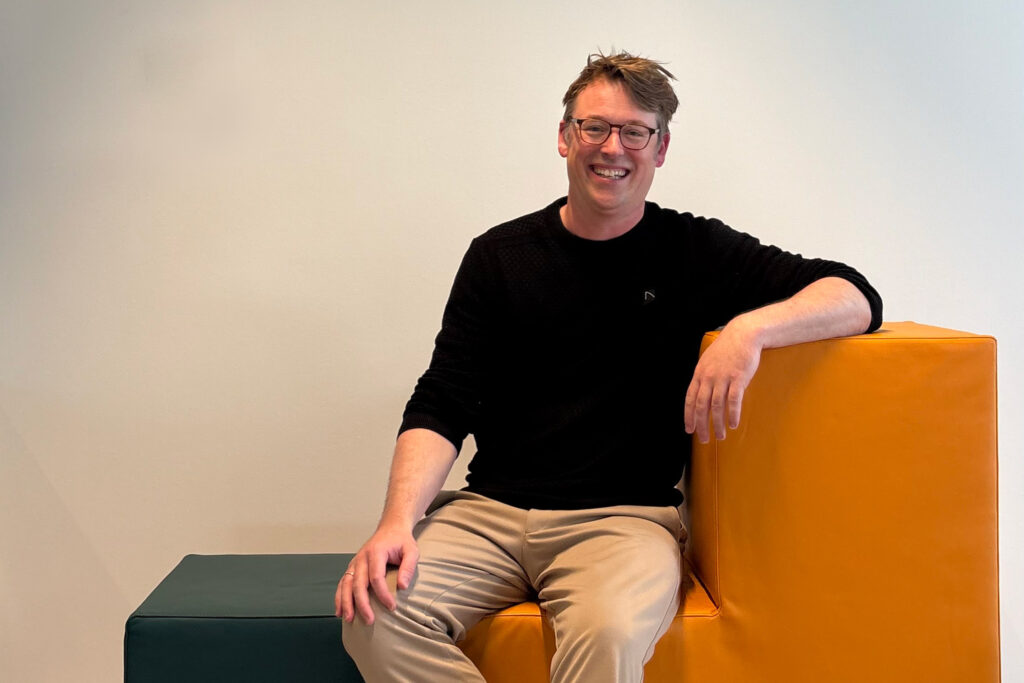
Tomas Sergeant: No, that is entirely correct. The C-Hotels Group is located, actually primarily, on the coast. On one hand, we have our C-Hotels brand, where we have seven hotels. We've also recently established ourselves inland. In Roeselare, we have our first hotel. And in addition, we also have a C-Collection. These are the outliers. The Upstairs Hotel indeed falls under this. Then you have De Ostendian, Rosa Hotel, West Bay. And that actually makes our group of eleven hotels quite unique.
[02:21] Location and positioning of Hotel Andromeda
Kris Vandekerckhove: You're next to the Kursaal too, I believe.
Tomas Sergeant: Correct. Yes, that's Hotel Andromeda with a full sea view. Pure holiday, four stars plus, right next to the Kursaal.
[02:32] The start of the conversation about AI in hospitality
Fantastic, fantastic. Right, this is going to be an interesting conversation. I can already feel it. We'll dive right in, Tomas. AI is pretty much everywhere these days. Everyone I speak to, regardless of sector, AI rules the airwaves at the moment. How do you view that evolution within hospitality with your IT background?
Tomas Sergeant: Yes, you do see evolution from time to time. But the evolution we are experiencing now is of a different nature. For now, it is completely turning the hospitality sector on its head. I personally think it's a good thing. When something is turned upside down, people rethink how can we adapt our processes, how can we actually improve the way we work. So that's a transformation that you have to grab with both hands. And that gives you an opportunity to do better, to really radically change things in the industry. But yes, this AI evolution is not... That's the case with us, but you also notice that with all suppliers, the tech sector, which suddenly adds AI bells and whistles everywhere in their software solutions to tick certain boxes, I suppose. But you also see loads of startups, loads of startups, contacting us with their ultimate AI solution. These are popping up like mushrooms. That is very striking. Anyway, the evolution is that we have to embrace it. We really do need to jump on the AI train. And yes, I think above all we need to see AI as a digital assistant, a support in our industry, not a replacement. That is an important point though.
[04:31] AI as support for human experience
Kris Vandekerckhove: Is that where AI really makes a difference today, at this moment, in hotels? That it becomes a digital assistant?
Tomas Sergeant: Yes, we do. I don't think everywhere yet, but you have to see hospitality a bit as something very human. Human interaction remains very important. And we notice that due to time pressure, this human interaction sometimes falls short. We are so busy with repetitive tasks, giving certain information to customers, which means we no longer have time to really ask how are you today? Did you enjoy your stay at our hotel? Enjoy your stay, we also have a tip about a restaurant. That part, that experience, is very important in our sector, and there is too little time for it. AI offers a certain level of support, giving us more time for more human interaction.
[05:30] Where does the human experience fit into the guest journey?
So you don't see AI as a risk to human experience, but rather as freeing up time for human experience? Correct, that is precisely the approach. Okay. And where exactly does that human experience lie? Is that during check-in, is it before check-in, is it during the hotel stay, is it afterwards? Where does it lie, in your opinion?
Yes, I think at the beginning or before booking, these are usually recurring questions, simply informative ones like "is this hotel right for me?". And those are questions that don't necessarily need to be handled by a human. I think the human aspect should be more during the stay. Afterwards, of course, you won't have human contact anymore, but the moment you check in, that's actually the point of contact for a customer. That's the start of their trip, their decision to stay at the hotel. So that human contact needs to remain, and then it's good that all other aspects are handled by AI, for example.
[06:46] Hyper-personalisation and guest data
Kris Vandekerckhove: Yes, do you do that too? Because I regularly speak with Belgians who are making waves abroad, like Sophia van Dalen in New York, for example, and a few others. And they say they have teams who scour the social media of their future clients to find out if they like apples or don't like lemons and all that sort of thing, so that they actually have a kind of ultra-personal experience. So, for example, if there's a fruit basket in the hotel room, they know in advance that they don't like bananas, so they certainly shouldn't put them there. Do you do that too yet?
Tomas Sergeant: Hyper-personalisation, to put it nicely, still seems a bit like something for the future. But we are noticing the tools that are available. For example, when we look at Mews, our reservation system, it already bundles the customer's information and gives our receptionist a kind of mini-brief, so they know perfectly: okay, this customer has stayed so many times, their average spend is this much, their preferred room is this, they usually bring a pet, and during booking, they specifically asked for a specific type of pillow to be prepared or a bottle of wine to be put in the room. We no longer have to delve deep into the system to find all these things. It's actually the reservation system that already bundles this via AI. And that is certainly the first step towards this hyper-personalisation.
[08:35] AI tools in hotels: three applications
Kris Vandekerckhove: Indeed. You work with AI tools and chatbots, Tomas. What are they already taking over at your place today?
Tomas Sergeant: Yes, it's a bit threefold. So we actually have support for the office, for management. We have support for the employees and we have support for our guests. I don't like to call them customers quickly, I find guests a nicer, more romantic word. But to return to the office for a moment: we are actually going to set up dynamic pricing, purely with AI. So actually AI will look: where is there pick-up? Is there a certain event? There's a concert launch and suddenly all those reservations come in for a specific day. Then the AI will actually adjust our pricing so that those prices increase.
[09:27] AI for revenue management and pricing
Kris Vandekerckhove: So where previously someone was fiddling around in Excel spreadsheets, that's now done fully automatically?
Tomas Sergeant: Correct. I was guilty of it myself in the past, but fortunately AI has taken over that task. It's not just about saving time, but it's also a huge revenue stream that we can generate by optimising it. You also have to look at it a bit like aviation. The airline is the perfect example of everything surrounding revenue management. Well, we're also fully engaged with it in hospitality.
[09:59] Internal AI assistant for employees
Tomas Sergeant: So yes, in addition to everything from pricing, we are then actually at the part, the part of employees. Before, you really had to support them, you had to start training new employees, for example, but you were left with a problem that each employee had a different way of answering, who, for example, didn't have certain knowledge or didn't master certain procedures well. And now we have actually kind of built within ChatGPT our own GPT, the CGPT, the C-Hotels Assistant. And that is then really purely an assistant for our receptionists. And they can ask all the questions about cancellation conditions, about specifications of a room. Is there a bath? Is there a shower in the room? But also for example: a customer gives a question about another hotel. That receptionist usually knows his own hotel. Then he can perfectly also go and ask: look, that hotel has those specifications. Or I'm looking for a hotel where a dog is allowed. We ask our GPT and he immediately says: those three hotels allow dogs. And that in turn provides that consistent information that a receptionist can give to our guests. Apart from the fact that you can cross-sell perfectly that way, of course.
[11:33] Group level and consistent communication
Kris Vandekerckhove: Of course, indeed. We remain a group and the individuality of a hotel is important, but I think it's a real added value if you can speak in the name of the group and that the information is correct everywhere.
Tomas Sergeant: Indeed, indeed.
[11:43] Inland expansion
Kris Vandekerckhove: For example, people who are allergic to the sea can now go to Roeselare apparently with you.
Tomas Sergeant: Correct, we recently opened the Westwing Hotel in Roeselare. That's near the Rumbeke exit. And that's our first step inland. So we're incredibly excited about it.
[11:59] Competition and growth
Kris Vandekerckhove: Are your colleagues getting a bit scared now that you've also moved inland? They thought you'd stay neatly by the sea, but it turned out to be disappointing.
Tomas Sergeant: I'll leave that open.
[12:12] AI for guest communication and automation
Kris Vandekerckhove: Okay, returning to AI. Does that effectively allow more time for staff?
Tomas Sergeant: Yes, well. That's what the third component takes care of. Indeed, there was a third component, that you free up more human interaction by having recurring questions captured by AI. And for that, we have certain tools. We use AskWhisper for that. That is one of those startups, but a startup that has a very good vision and actually a very good system, where in addition to an AI chatbot on the website, they actually also have some kind of communication via WhatsApp. And they are actually going to use those different channels to give the right information to customers. And then that's for example: is there parking in the hotel? What time do I have to check in? How much will it cost extra for breakfast? These are all standard questions that we see recurring all the time. And if we put that on our staff, they always have to give the same answers anyway, so it's the perfect example of how AI can support our staff, but also properly inform guests, prospective guests, at the right time. Imagine, it's 11 o'clock at night, you want to book a hotel, but you have a very important question. And that makes the difference between that reservation or not. And that customer wants to know that immediately, otherwise he will look for another hotel or book through Booking or something. So if you can give them the right information at that moment, you give them that extra push to make that reservation. And that does make a very big difference.
[14:09] Communication via WhatsApp and upselling
Kris Vandekerckhove: Am I mistaken? This is even before the guest is a guest. For example, I can also quite imagine that if a guest has a reservation, you probably have the guest's telephone number, and the guest receives a message via WhatsApp saying something like 'welcome to our hotel soon', and then you can also ask questions via WhatsApp about what's happening around the hotel or in the hotel? For instance, what time is breakfast, that sort of thing?
Tomas Sergeant: Yes, indeed. So on the one hand, your AI chatbot to ask reservation questions, but then also: they have reserved, then they spontaneously receive a WhatsApp message via AskWhisper that welcomes them to the hotel, that says: look, you can park there, this is the information. If you want to find a restaurant, we offer that option and you can ask anything via WhatsApp. So you just say: look, I want to book an extra cot. Then that will be automatically adjusted in the system, without human interaction. Then it will also suggest, for example, of: are you interested in a bottle of champagne upon arrival? No problem, go ahead. Or: look, you actually have a classic room. We see that there is still a sea-view room available. Are you interested for that price?
Kris Vandekerckhove: Upselling then.
Tomas Sergeant: Upselling, indeed. So all that happens automatically and that also ensures extra revenue, but also automates those repetitive tasks.
[15:37] Ecosystem around the guest and control over information
Kris Vandekerckhove: So essentially, the guest ends up in a kind of ecosystem where they can stay neatly within it and remain within your bubble, and essentially ask for, receive, and do everything they expect.
Tomas Sergeant: That's right. And we're going to define ourselves what information we give to customers. So it won't just be pulled from a system, and then we'll decide ourselves what information is given. We will then filter it again to see if, when those questions come in, this is the correct answer we want to give.
Kris Vandekerckhove: And naturally, this is all 24/7, is that a must?
Tomas Sergeant: Look, it's not a must, but I do think you'll make a very big difference. So, the moment a customer is hesitating is the best moment to really grab them and convince them to book with your hotel. The trust that you offer is precisely what makes the difference in that conversion.
[16:34] Omnichannel communication in hospitality
Kris Vandekerckhove: Let's talk about omnichannel, a buzzword that everyone's using but few companies are actually doing well. What's going wrong today with hotels?
Tomas Sergeant: Yes, communication is important, but we also notice that each guest has their preferred communication channel. That's an evolution we are observing. Previously, you had the telephone, you had email; that was the only way to actually contact a hotel. But now we're going much further. You can reach us via the Facebook page, via Instagram, via WhatsApp, via a webchat on the website. There are so many channels to obtain your information. And the combination of these different channels is multichannel. But by ensuring that this information is also consistent across all these channels, you create a type of omnichannel. And that makes it very engaging in our sector.
[17:33] Guest journey and the role of communication
Kris Vandekerckhove: And does that make the perfect guest journey according to you, that good omnichannel experience?
Yes, well, a guest journey, that indeed goes from before you book, through the booking process, to after booking, to the moment you walk into the hotel, the check-in, the whole experience in the hotel when you enter, the music playing, you arrive in your room, there's a gift or a written note there, through to the checkout, and after the stay. So all steps are part of that guest journey. Actually, the common thread of the guest journey is communication. Everything starts with that. That's actually for the booking, how you provide the information, up to the information you provide after booking, and so on, in what way they can ask questions via their preferred channel, but also that the information is accurate. It's a challenge for hotels to ensure that information is correct, because it's very labour-intensive to ensure that the right information stays up-to-date for every channel.
[18:50] Single source of truth in data structure
Kris Vandekerckhove: Can AskWhisper not help here either?
Tomas Sergeant: Yes, correct. Provided that we supplement all the information from the reservation system in the dashboard with extra information that we determine, that is essentially your structured data layer. And naturally, if you can ask those questions via WhatsApp, via the live chat, there are of course also possibilities to extract that information for employees and so on. But in any case, you have a structured data layer, one central point where the data is correct and everything is linked to it.
And when I ask a question or if my dog Levi is allowed via fax, how do we respond to that, Tomas?
Tomas Sergeant: The fax, look, I remember that ten years ago. I saw that, I pulled the plug on it and never plugged it back in, so no, that's where it stops. Those omnichannel stories also have their limits.
[19:46] SEO versus AI and visibility in LLMs
Kris Vandekerckhove: So that has its limits, yes. Alright, that's good. We've actually been optimising for Google for years. We're so used to it now, as if no other search engine exists anymore. But still, do we actually need to become AI-proof now too?
Tomas Sergeant: Yes, until now it was very important on your website to make sure the SEO was good. SEO-friendly, you had to use HTML meta text with the right descriptions. That then evolved into the correct structure of the website. Certain headings and text had to be correctly worded in the HTML tags and so on. That did matter. But now we are actually in an evolution where sometimes you even enter results or search queries into Google and it immediately gives you all the answers, instead of having to click through to the website. Yes, those answers are AI. Whether that you ask that question through ChatGPT or nowadays in a search on any robot, you will get your answer through AI. And so it's very important that you do be ready for that. That when a question is asked, that your hotel is also part of those answers. And that SEO is not enough anymore. You actually need to be able to ensure that those LLMs can link to your system and actually get that information from it.
[21:21] Technical challenge: data integration and MCP
Kris Vandekerckhove: You also talk about the fact that the information is sourced from PMS, the website, and OTAs. How does that work exactly?
Tomas Sergeant: Yes, that's a bit of the challenge. You can hardly expect an LLM to interface with your reservation system, with your CRM, with your website, with your AI chatbot. That's all too much. So you actually have to start creating a layer in between that and that's kind of the single source of truth, your structured data point where all the information is correct and uniform. And the LLMs can then start connecting to that. There is a technical solution for that. To be honest, the market is still very much searching what the ideal solution is. But one such solution is actually an MCP, a Model Context Protocol. They see that a bit like the USB-C for AI. That's basically a universal way to connect, to integrate something. Anyway, that is not optimal in this case of hospitality, because I can give you an example. If you would stick such an MCP layer between your software solutions, then actually the guest, the end customer, has to add a plugin to his ChatGPT to talk to that protocol, to that layer. And the biggest challenge is also of: okay, which layer will the LLM address? Shall I take the one from the hotel directly or shall I take the one from Booking? Because of course, in Booking there are all the occupancies of the rooms, all the prices, those are all available. And ChatGPT to this day also has a link to that booking system. And then it does seem logical that ChatGPT will choose Booking. And then you actually lose your direct booking.
[23:23] Machine-readable websites and the future of SEO
Kris Vandekerckhove: And how do you manage that if you do want to have the direct reservation?
Tomas Sergeant: Yes, so then that MCP solution isn't ideal. So it's actually a step back, the improved version of SEO. That's your website's structure, but actually seeing the website in parallel. So a website isn't just for people, but also for machines, for LLMs. And then you actually have to create a machine language version of your website in parallel, a technical document that perfectly offers all the information to the LLMs. And if they can read that information well, then your pick-up in the ChatGPT story is much better.
[24:10] Accessibility of AI for smaller hoteliers
Kris Vandekerckhove: I don't think many people actually know what you've just told us, Tomas?
Yes, it's explained a bit vaguely, but how you actually approach it practically remains a challenge. And it's already a step too far for small hoteliers. Yes, I think the affinity I have with technology is an advantage in that. But I do find it a very fascinating concept. But again, it's an evolution. We don't know exactly where it's heading. But that structured layer, that single point of truth, that is a very important concept.
[24:47] Smaller hotels versus larger chains
Kris Vandekerckhove: And you're only just touching on it, the small hotelier. We've had a few conversations here and it sometimes boils down to the fact that the mid-range segment is in danger of disappearing in the hotel business. So either you have to opt for hyper-personalisation, hyper luxury, ultra luxury, or you go towards almost the 'living room hotels', but everything in between... Doesn't that also have something to do with technology? Because I can quite imagine that those who have such a hotel and run it with a sort of grandmother and grandfather feeling, they don't know all of this here and they can't do it, and perhaps they don't want to either.
Tomas Sergeant: No, I also think that the charm of that story will remain and that's their selling point. That you feel a bit at home in a family affair and certain people specifically choose that. But the information you provide is important in that and how you present your hotel. And if you then naturally don't stand out among the bigger hotels that specifically focus on experience and information, then they might miss out. But I think you will then also get more reservations via Booking rather than direct reservations. That's where the difference mainly lies, not that they will no longer choose that type of hotel.
[26:21] What really makes a difference for hotels today
Kris Vandekerckhove: Lots of hotels talk about how good they are, but of course, everyone does that. What really makes a difference nowadays, in your opinion?
Tomas Sergeant: Yes, saying how good you are indeed no longer makes the difference. I don’t think it makes much sense to start throwing discount codes and last-minute deals around beforehand either. You really have to convince your future guests with the experience, with what they will go through, with how the hotel is presented to them. That is actually very important. And trust in communication, comfort, and feeling, that is what makes the difference. And that feeling leads to reservations. I think that the confirmation of that good feeling, even after a hotel stay, makes the difference. That can be through word-of-mouth. Saying: look, this is really my favourite hotel, go there. You actually create a loyal fanbase by focusing on that experience.
[27:33] Brand love and brand experience
Kris Vandekerckhove: You are creating a love brand.
Tomas Sergeant: That's right. That's beautifully put. I think that's also a bit of our philosophy at the C-Hotels group: that we really want to be a love brand. Perhaps we should also change our slogan from 'You're just the perfect stay' to 'The love brand'.
[28:06] Future vision: hyper-personalisation and home automation
Kris Vandekerckhove: If you had to change one thing in a hotel tomorrow to be truly ready for the future, what would it be?
Tomas Sergeant: Yes, I think we talked about it once in the first questions. Hyperpersonalisation. I do believe a lot is going to happen there as well. The tools are going to use it more and more to really provide a unique experience or service to the customers that is very specifically tailored to his needs. That will really be so that when you enter the hotel, your choice of pillow will be ready, your choice of drinks will be ready there. To even the settings of the heating or lighting. Or your name appearing on the control panels. Or the television being in French if you are French-speaking. Those little differences are also back part of that perfect guest journey you want to achieve. And we do see certain movements now. We are not there yet, but I really do see things already. For example, we have a hotel that already works with full domotics. So we can start controlling heating centrally. We can also start reading everything. And then you have certain partners, for example Wizards of Dream, who actually translate that home automation to the reservation system, who actually make the translation of: OK, this customer wants those settings, I'll adjust it that way, according to the info I get from the reservation system.
[30:01] Energy optimisation through technology
Kris Vandekerckhove: We are actually talking about energy optimisation here.
Yes, that is naturally the best step for a hotel owner to take. Provided we can control the heating and provided there is a link to the reservation system, you can, for example, say: okay, if there is no guest present, we will turn down the heating. From when there is occupancy on that day, we will ensure that the heating is set to a certain level. Upon check-in, it will go up by just that degree more, so that when they are in the room, they will still have that pleasant, comfortable feeling. Not only good for the environment, but naturally, indeed, for your energy bill as well.
[30:42] Episode ending
Kris Vandekerckhove: Tomas, thank you for the conversation and for the many insights. What I'll particularly take away, among other things, is that technology isn't about less humanity, but rather about creating more space for humanity and personalisation. This was Hotelvak, the podcast, the place where hospitality, technology, and marketing come together. And in Tomas, we had all these terms in one person, so that was fantastic. Thank you.
Thank you, I really enjoyed it. Thank you for the invitation and to all the listeners, definitely visit seahotels.be sometime. Bye.
Kris Vandekerckhove: All right. Don't want to miss an episode? Follow us via your favourite podcast platform. Thanks for listening and until the next episode.