hotelvak.be
EN

Platform on hotel management, interior design and design in Flanders
From environment to interior
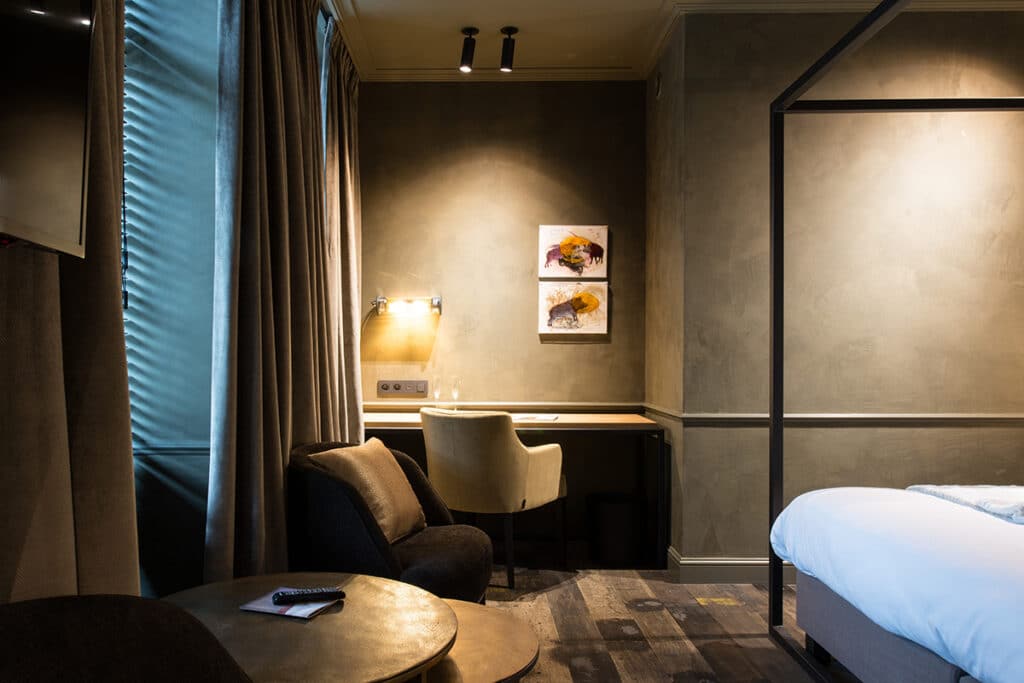
An interior that is right feels natural. It allows itself to be experienced as a space that has meaning, where the environment steps in. For INSIDE's designers, this is not a coincidence, but a conscious choice. “We see the interior as a storyteller,” says Ian Meulemeester, creative director at INSIDE. “Every detail can link to the place: nature, the city, the history or even the previous occupants or owners.”
An INSIDE project always starts with the context. That can be the architecture of the building, but equally the colours of the sea, the character of a city or the memory of former owners. From these layers, INSIDE's designers distil accents that bring an interior to life.
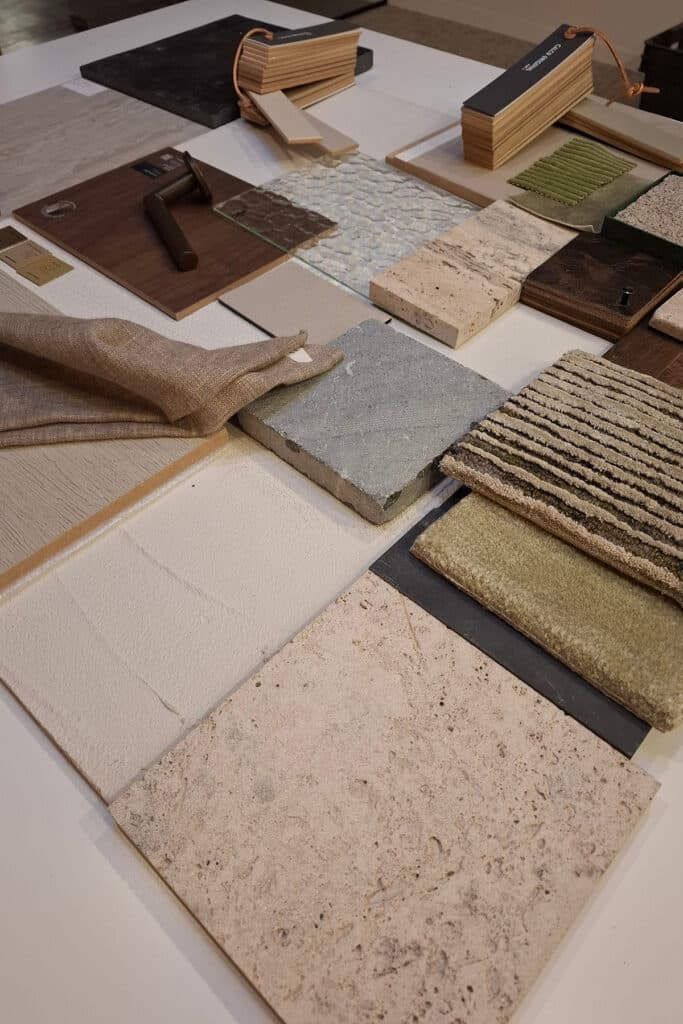
According to Miquel Serlet, designer at INSIDE, stories don't have to shout loudly. “Sometimes the reference is in a material, a colour or an object. A weathered piece of wood that floated in the sea for years can become a powerful symbol in a coastal interior. Or think of a wall in sand tones, or tiling that reflects the blue-grey hues of the North Sea. That evokes recognition.”
Carlo Toye, sales advisor at INSIDE, adds: “It's all in the details. An interior should never become a museum, but a place where the atmosphere is right. One floor, wall or object can be enough to take the environment inside.”
Besides nature and architecture, history also plays a role. Serlet explains how that works in practice: “In a hotel project, we reconstructed the past by naming rooms after former owners. Guests thus ended up not just in a room, but in a story that goes back in time.”
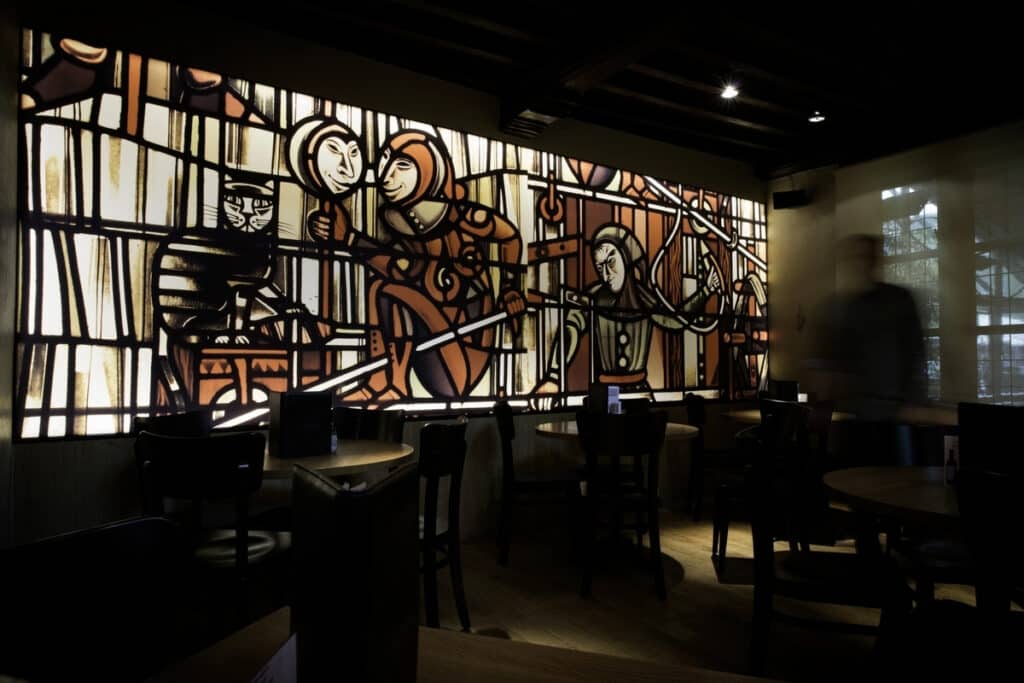
Another example is café-restaurant ’t Klein Stadhuis in Ypres. There, the designers drew inspiration from the town hall's stained-glass windows. Ian Meulemeester, creative director at INSIDE: “Those windows depict, among other things, the Ypres cats and refer to the history of textiles. We translated this symbolism to the interior. So the catering establishment became more than a place to eat or drink; it also became a subtle ode to the city.”
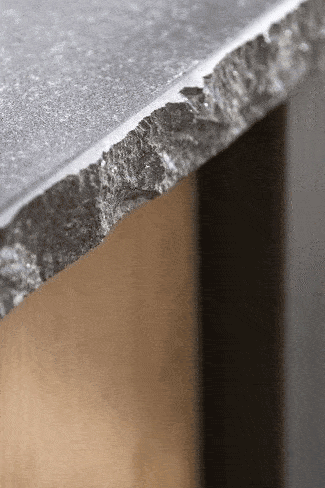
In Nivelles too - at hotel Rifflar, which is still in the preliminary design phase - INSIDE took inspiration from its surroundings. After all, the city is known for its blue stone quarries. Meulemeester: “In that particular hotel project, we deliberately used this local material. This gives the counter a striking accent in solid bluestone. That immediately creates a strong anchoring in the region.”
That anchoring is not only aesthetic, but also commercially valuable. “Guests remember interiors that tell a story. A room that harks back to history or a bar that holds the colours of the sea stays with them. It creates recognition. Anyone from here feels pride. Those who visit get to know the region better.”
Another important part of the design is the so-called walking lines - the routes guests take through a hotel or restaurant. According to Meulemeester, this is not just about efficiency. “Of course the circulation has to be logical and practical, but we also check it against the context.”
Serlet adds: “A walkway can enhance a story. Think of a bar deliberately placed so that you have a view of a tree in the garden from the lobby, or a corridor that leads the eye to a work of art or historical element. In this way, moving through the space becomes an experience that takes on meaning. Walking lines connect functionality with emotion. They almost automatically direct guests past the accents that tell the story of the interior and its surroundings.”
The creative process always starts on location. Looking at how a building breathes, how the light falls, how the surroundings present themselves. Toye: “From those impressions, ideas arise that we translate into interior design choices. But subtlety is essential. Too explicit quickly becomes kitsch. If you dose it right, an interior gets that layeredness that makes people curious. Then the space becomes a storyteller that fits its surroundings.”