hotelvak.be
EN

Platform on hotel management, interior design and design in Flanders
Why ‘the blue bag’ is becoming increasingly important…
Sorting waste has long ceased to be an optional exercise for the hospitality industry. Amidst stricter regulations, rising waste costs, and new European obligations, pressure is mounting on catering businesses to manage waste and packaging more intelligently. However, according to Fost Plus, this doesn't have to be complicated. “We've noticed that small interventions, in particular, often already make a big difference,” says Christine Vermeulen, Out-of-Home Project Manager at Fost Plus.
According to Vermeulen, everything starts with a distinction between what she calls the ‘frontend’ and the ‘backend’. “The backend is the sorting on the staff side, the frontend on the visitor side,” she explains. “This backend, in particular, is a quick win because catering business owners have control over it themselves.”
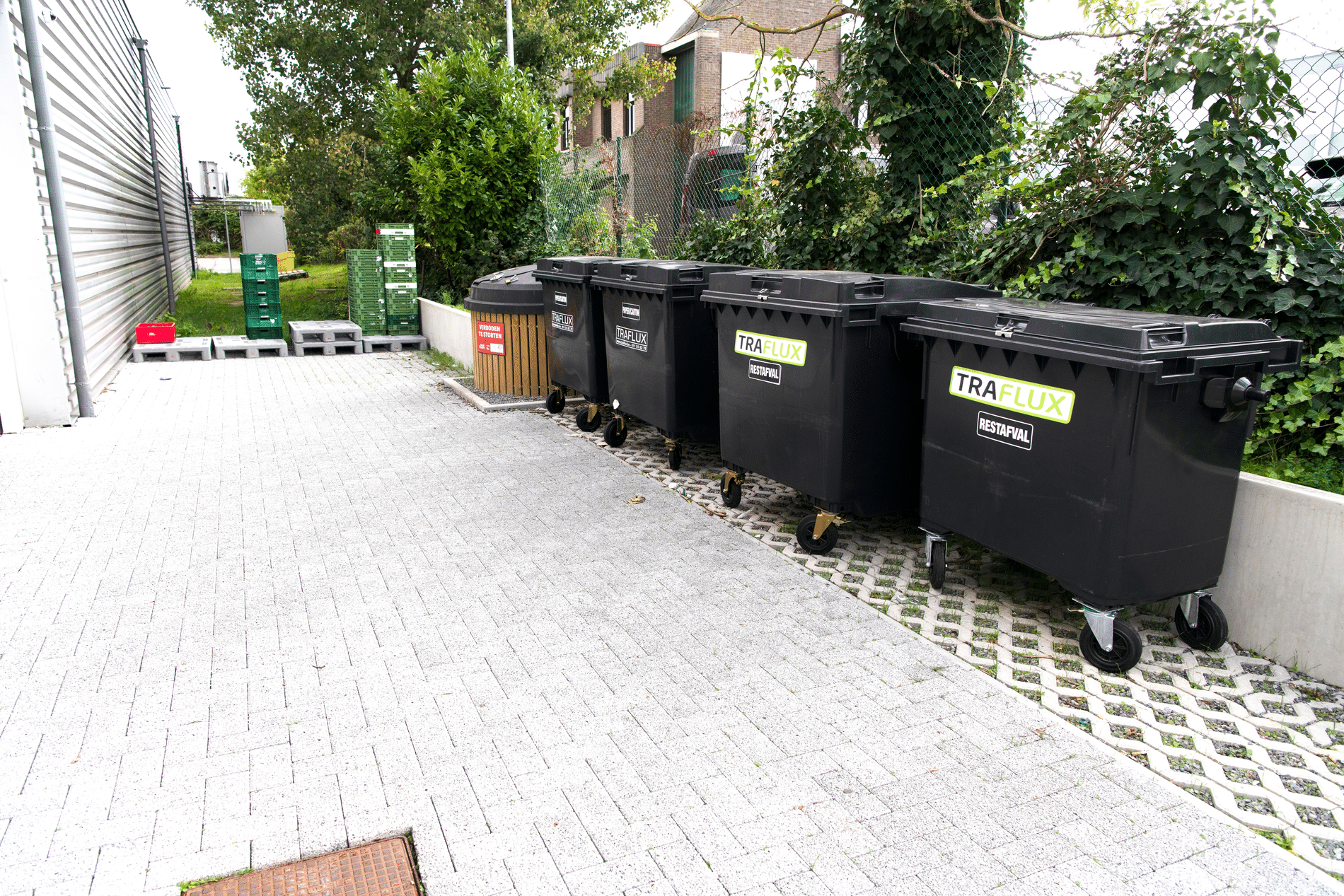
Fost Plus has guided various pilot projects in the hospitality sector in recent years, including with Top Brands – the group behind Pizza Hut, Ellis Gourmet Burger, Wasbar and PAUL – but also with youth hostels on the coast in collaboration with Westtoer. This showed in particular that clear communication and adapted infrastructure are crucial. “In professional kitchens, employees see a lot of packaging that resembles household packaging, but is larger,” says Vermeulen. “This creates doubt: does this belong in the PMD (Recyclable Materials) or not?”
For this reason, Fost Plus developed specific sorting guidelines for the hospitality sector. With success: some restaurants within the Top Brands project were able to reduce their residual waste by as much as 50 percent. “That was purely thanks to better sorting behaviour from employees,” according to Vermeulen.
The expansion of the plastic waste rules ultimately results in more simplicity, not less, according to Fost Plus. “Previously, only PET bottles and cans were allowed in the blue bag. Today, all plastic household packaging can go in,” says Vermeulen. “The first question people should ask themselves is not, ‘Is it plastic?’, but rather, ‘Is it packaging?’.”
This also translates into practice. Residual waste volumes are visibly decreasing, while PMD is becoming increasingly important. Several inter-municipalities are therefore switching to less frequent collections of residual waste. “Normally, you mainly have PMD and GFT at home today, and very little residual waste,” says Vermeulen. “We are also seeing this in catering kitchens.”
Despite the more complex regulations, Belgium remains an example in terms of waste sorting, according to Fost Plus. “Belgium is still among the European leaders in selective collection,” says Vermeulen. “But as soon as we are outside the home, we often lose that reflex.”
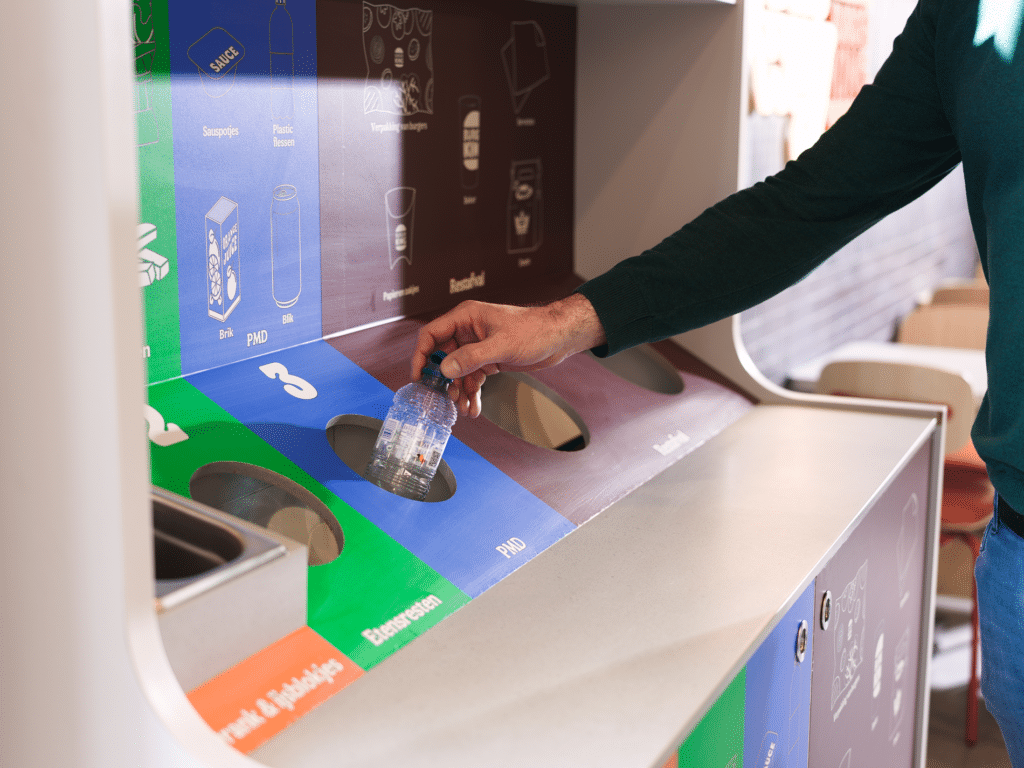
The logical consequence of this is that there is still a considerable need for awareness-raising on the visitor side (frontend). Consider fast-food restaurants, events, or hotel buffets where different waste streams are present, but not always used correctly.
Besides sorting, Fost Plus sees a second major opportunity for the hospitality sector: reuse. European legislation is increasingly steering the sector towards reusable packaging and less disposable consumption. “From February 2027, takeaway businesses will be obliged to allow customers to bring their own packaging and have it filled on-site. A year later, from February 2028, catering establishments will also have to offer reusable packaging within an official reuse system – so that customers without their own packaging can also opt for a sustainable option. In addition, from 2030, European legislation will prohibit single-use plastic for food and drinks consumed on-site – whether at a table, at the counter, or on a shared terrace. Only establishments without access to drinking water are exempt. By 2030, the aim is for ten percent of catering offerings to be provided in reusable packaging,” says Vermeulen.
Fost Plus is therefore also guiding pilot projects on reuse. For example, a pilot project with caterer Umami will start at UHasselt at the beginning of 2027, where reusable packaging will be used. Initial insights suggest that reuse in closed or semi-closed environments – such as a university campus – can be more attractive to consumers than expected, and can lead to cost savings for caterers. The pilot aims to further substantiate these findings and share them on a larger scale with the entire sector.
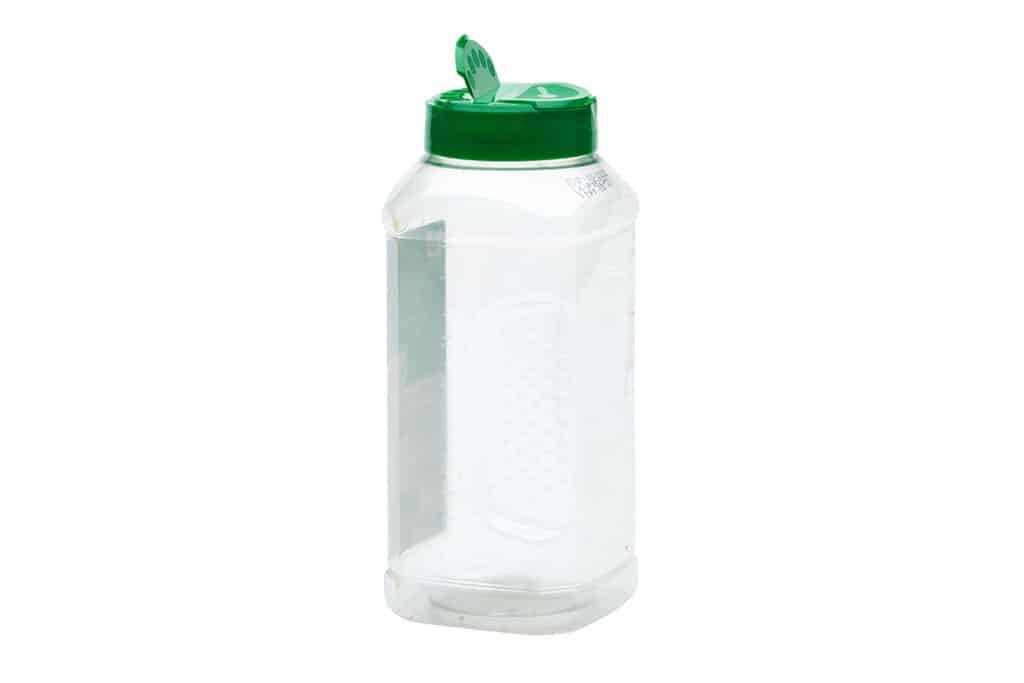
There is a taboo surrounding checks on waste sorting, but according to Vermeulen, enforcement does take place. “In Flanders, this is done by the Department of Environment of the Flemish Government,” she says. “Companies that are not (fully) compliant are often referred to Fost Plus for guidance.” This support extends beyond just PMD. Together with waste operators, Fost Plus examines the complete waste profile of a hospitality business, including food waste and other waste streams.
And as a doorman, what is the biggest misunderstanding? That sorting waste would be difficult. “We do it at home too,” decides Christine Vermeulen. “Why would it be more complicated outside the home?”
- www.fostplus.be/nl/inzamelen-sorteren/horeca
- www.sorterenophetwerk.be