hotelvak.be
EN

Platform on hotel management, interior design and design in Flanders
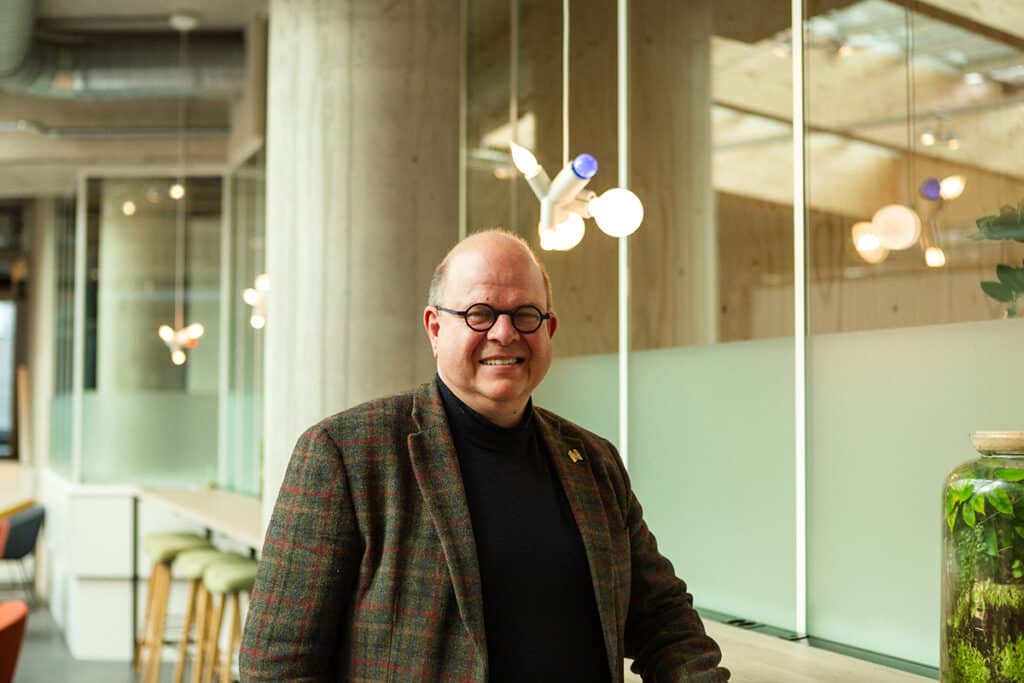
Whoever speaks to Thijs Merks immediately hears the voice of a hotelier pur sang. After years of being responsible for the operation of all Accor hotels in the Benelux, Thijs Merks decided to seek entrepreneurship. He led the acquisition of Postillon Hotels and now runs several hotels, including ibis Styles Delft City Centre, Villa Schoolthoff and Hotel Maison Maastricht Centrum. Three completely different hotels, but with one common denominator: a keen eye for innovation, without losing sight of people.
In all those years, he saw the industry change. Or rather, not change at all. “We have the most beautiful profession in the world, but we find change incredibly difficult,” he says. “We often keep doing things the way we have always done them, until there is really no other way.” Yet he is convinced that the future of hospitality lies precisely in this innovation. “If we want to continue offering hospitality, we have to work smarter: with more attention to people and less time for administration.” In this interview, Merks shares his down-to-earth take on technology, behaviour and why he believes Groupz will help future-proof hotels.
“The hotel business is a wonderful profession, but also a traditional one,” Merks says. “We want to keep everything personal, and I understand that. Contact with guests is fragile, you don't want to lose that. But staff are getting scarcer, costs are rising, and the pressure on returns is increasing. Then you can't keep doing everything like before.”
He sees it every day: “There is often resistance to change. That is human. We don't want technology to replace personal contact. But automating does not mean taking out the human being. On the contrary, it means making room for the moments that matter. If a system does the administration, the employee can finally focus on the guest again. And that makes work more enjoyable for everyone.”
Merks is not someone who digitises blindly. “You have to look closely at where automation really adds value,” he says. “For me, that always starts with the guest: does it make the experience better, easier or more personal? If the answer is no, then we don't do it.” Then he looks at the data. “Good information helps you work smarter. If we know better why guests come or how a group is composed, we can help them better and target our marketing much more effectively. That's not only more efficient, it makes the whole operation sharper.”
According to him, there are numerous processes that can be better supported with technology. “Think of check-in or group bookings. Those processes are often complex and manual. By partly automating that, you create space for where we as hotels make the difference: hospitality, attention and experience.”
“Automation is not a cost-cutting exercise for me. It is an investment in quality: of the work, the data and the guest experience.”
Merks knew Groupz founder Niek van den Broek - himself a hotelier - from the hotel business. “We've been in the business together for years, so I know he understands these kinds of processes,” he says. When they talked about the challenges at ibis Styles Delft City Centre, where an employee went on maternity leave and a group process needed to be better organised, Niek told them about Groupz. “That conversation came at exactly the right time,” says Merks. “We needed to find a way to make the process more manageable, without compromising quality. Niek explained what Groupz did and I immediately thought: this sounds logical. Not as just another system, but as a solution that really adds something. So we just gave it a try.”
Taking a leap of faith and trying new things is no stranger to Merks anyway. “I have tried plenty of things that didn't work the way they were advertised, but with Groupz, I had no doubt. It worked well immediately. The replacement had mastered everything within two or three weeks: that would never have been possible the old way. Then you would have been talking about two to three months. ”
Meanwhile, Merks has also brought Groupz to the attention of other hotels. “At ibis Almere, for example. There, the group process was not running well. We then made someone specifically responsible for group bookings and implemented Groupz. That made a world of difference. Administrative tasks, such as lists of names or room assignments, are now left to the group leader. That not only saves time, it is also much more reliable.”
He sees the impact of Groupz mainly in day-to-day operations. “Chamber lists were always a hassle. That is now a thing of the past. Less goes wrong, we have less noise in communication, and the whole process has become predictable.”
He also notices the difference financially. “We have less hassle afterwards, fewer discussions about rooms or repayments. That saves time and frustration. Moreover, the data quality is much better: we know why guests come and with how many people, which allows us to use marketing smarter and better
steering for efficiency.”
That better structure is also paying off concretely. “We saw an increase of about ten per cent in upsell, especially in ibis Styles Almere, because we were able to offer groups extra dinners there. We also save about six hours a week in administrative work in both locations. That doesn't sound spectacular, but it's still about nine thousand euros a year per hotel. And more importantly: the time freed up, we spend on the guest.”
“What also makes a big difference,” he adds, “is that the information from Groupz is now available to reception and the restaurant in a structured way. As a result, we know exactly what was agreed and guests get what was promised. That makes it not only more efficient, but also more guest-oriented.”
But perhaps most importantly, employees work with more peace of mind. “They don't have to constantly switch between e-mails, Excel lists and phone notes. Everything is neatly together. This creates peace of mind. And calmness translates to better guest experience.”
Yet Merks stresses that technology alone is not enough. “The success of such a change depends on behaviour. You have to bring people along and get them used to the change. It is important that they see and experience that it makes their work more fun and meaningful. About three quarters of people think this is great, and for the rest it might just not be the right place anymore. For most people, it actually means being closer to the guest. And that's why we once chose this profession.”
He believes hotels that combine innovation with a focus on people are going to make a difference. “The guest notices it immediately when there is calmness and focus in a team. That's where hospitality starts.”
Whereas many entrepreneurs link technology to cost savings, Merks looks at it differently. “For me, it's not about hours or euros. It starts with the guest. Only then do I look at ROI. If it improves the experience, the rest follows naturally.”
He sees efficiency wider than numbers. “You invest in peace, in quality, in fewer mistakes. You avoid hassle, and that is also return. And fair is fair: if the work becomes more fun, people stay longer. That is perhaps the biggest gain.”
In doing so, he works from a clear idea: ROGE, or Return on Guest Experience. “A better experience in our guest journey ultimately delivers everything that matters: higher spend, great conversations and better reviews. That's what we do it for.”
Merks advises his colleagues to regularly step away from the delusion of the day. “We are all busy with operations: every day has to be perfect. But precisely because of this, there is little space to reflect. Sometimes you need to step out of the operation for a while, or let someone from outside look in. That always pays off.”
He concludes with a smile: “Groupz helps with that. Not because it is a system, but because it brings structure and calm. And that is exactly what we need in the hotel industry: clarity, quality, and time for what really counts ... the guest.”