hotelvak.be
EN

Platform on hotel management, interior design and design in Flanders
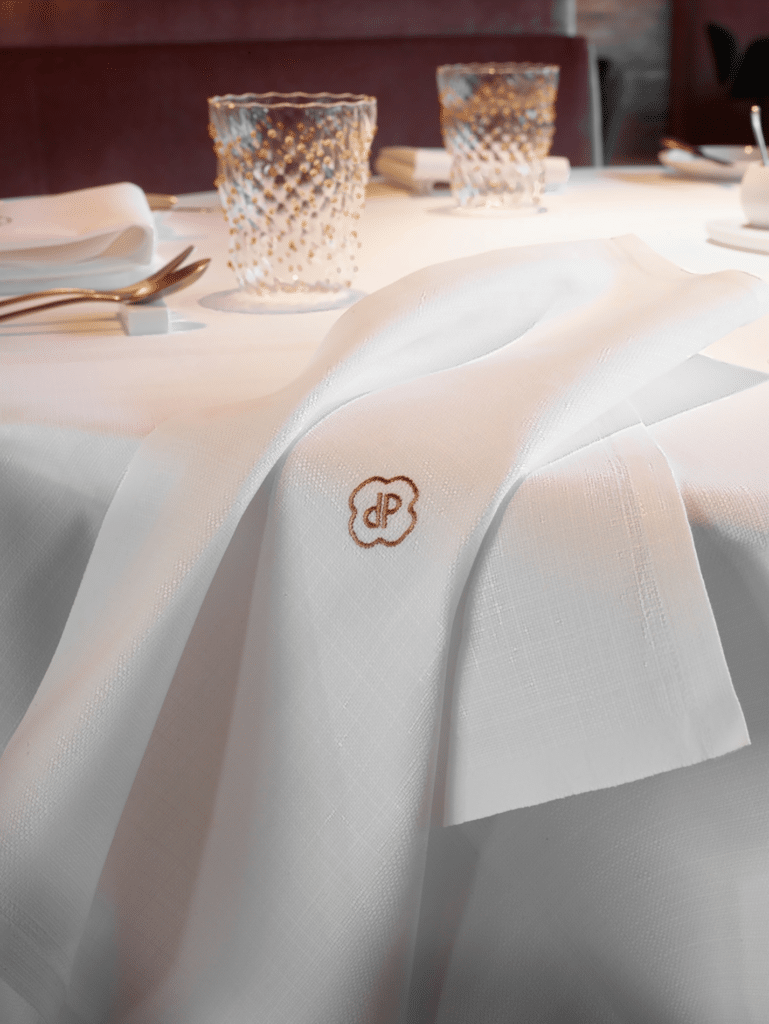
Finishes and textile styling exude allure and breathe tradition. However, tradition alone is not always enough as a commercial argument. “We must play all our aces today to underline the added value of table linen and to compete with current trends,” testifies Thomas Silversmet, sales director Benelux at linen producer De Witte Lietaer.
“The current trend originated from architecture, where ‘raw’ materials are once again popular. Such evolutions happen in waves: older colleagues told me they experienced something similar in the 1980s. This time, the trend gained extra momentum due to the pandemic in 2020-2021, when governments tried to restrict transport as much as possible – including to and from laundries.”
Furniture designers are tapping into this trend. “Increasingly, they are offering finishes with incorporated logos or other recognisable elements that strengthen a business's own identity. Even chains aiming for mass production are doing this. Such details naturally disappear from view as soon as you use tablecloths or chair covers.”
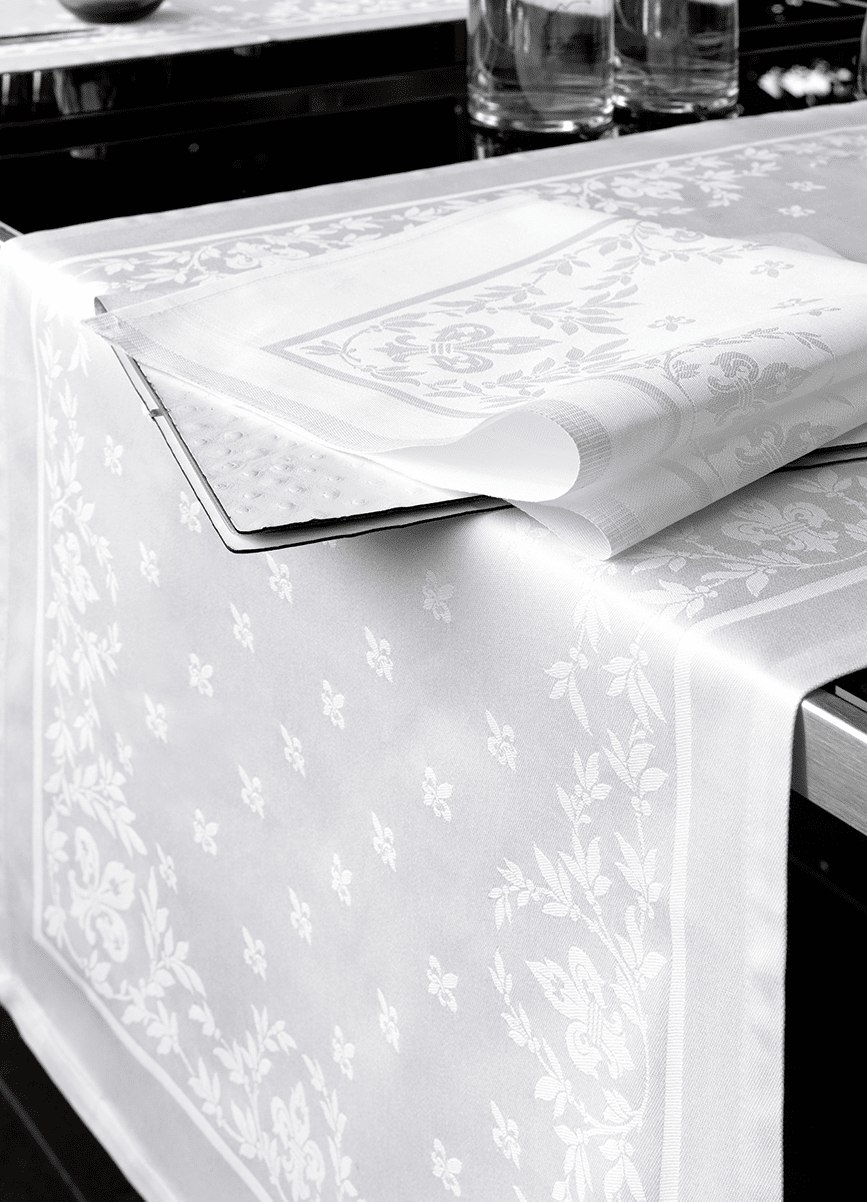
“Fortunately, we have strong, objective arguments to convince hospitality customers. Table linen, for example, is ideal for camouflaging minor damage and signs of wear on heavily used furniture. Furthermore, beautifully ironed linen demonstrably creates more sophistication and a warmer atmosphere.”
Silversmet refers to a concrete example: “Did you watch the VTM programme ‘Mijn Restaurant’? The winner, restaurant Lucien from Kortrijk, is heavily focused on table linen. Consciously or unconsciously, that décor contributes to the overall experience. That always plays a part in the assessment, both by juries and by the general public. It’s obviously very nice to see that a business using linen actually won the top prize,” he adds. “Globally, you notice that Michelin-starred restaurants remain loyal to table linen or napkins.”
Other benefits are less visible, but no less important for that. “Textiles improve acoustics: they dampen the sound of cutlery and crockery, among other things. They also prevent glass from breaking when glasses are knocked over, especially in combination with a Molton. There's nothing more irritating than constantly hearing crockery during dinner or not being able to understand your conversation partner because the room's acoustics aren't right and there's a reverberant nuisance.”
Linen also scores highly in terms of hygiene. “Cotton can be washed at high temperatures, efficiently removing bacteria and stains. The material also absorbs moisture well and dries relatively quickly. Thanks to its long lifespan, it is often cheaper in the long run than disposable solutions and helps reduce the amount of waste. Thanks to current washing techniques in laundries, which are continuously being improved, linen maintenance is now particularly environmentally friendly. If treated and maintained correctly, tablecloths can last hundreds of washes.“
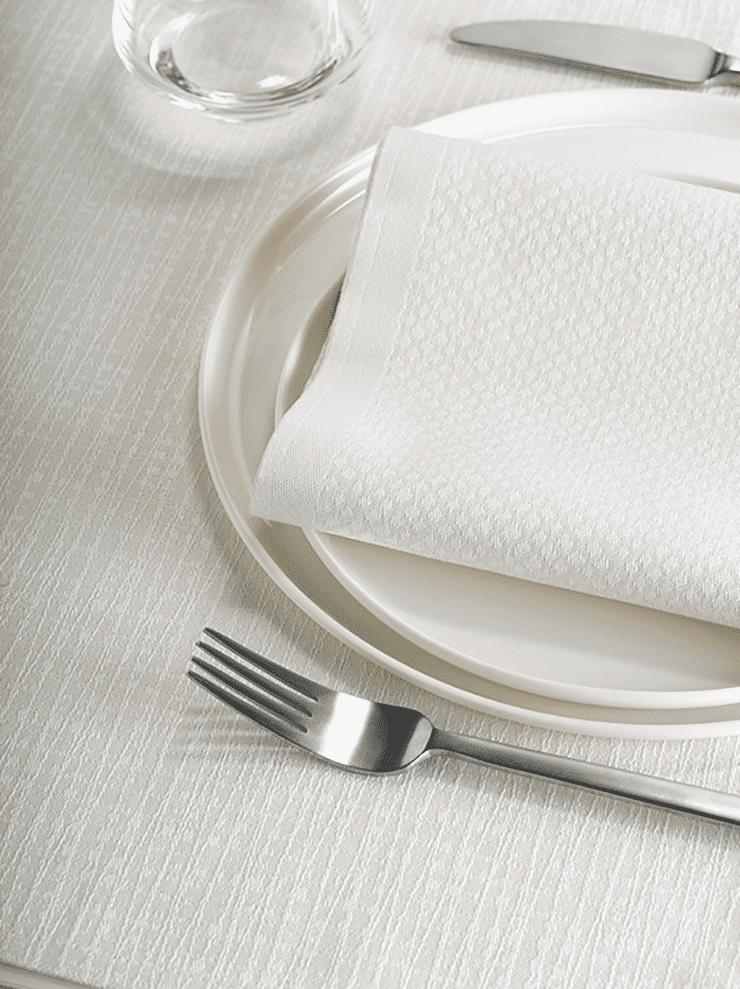
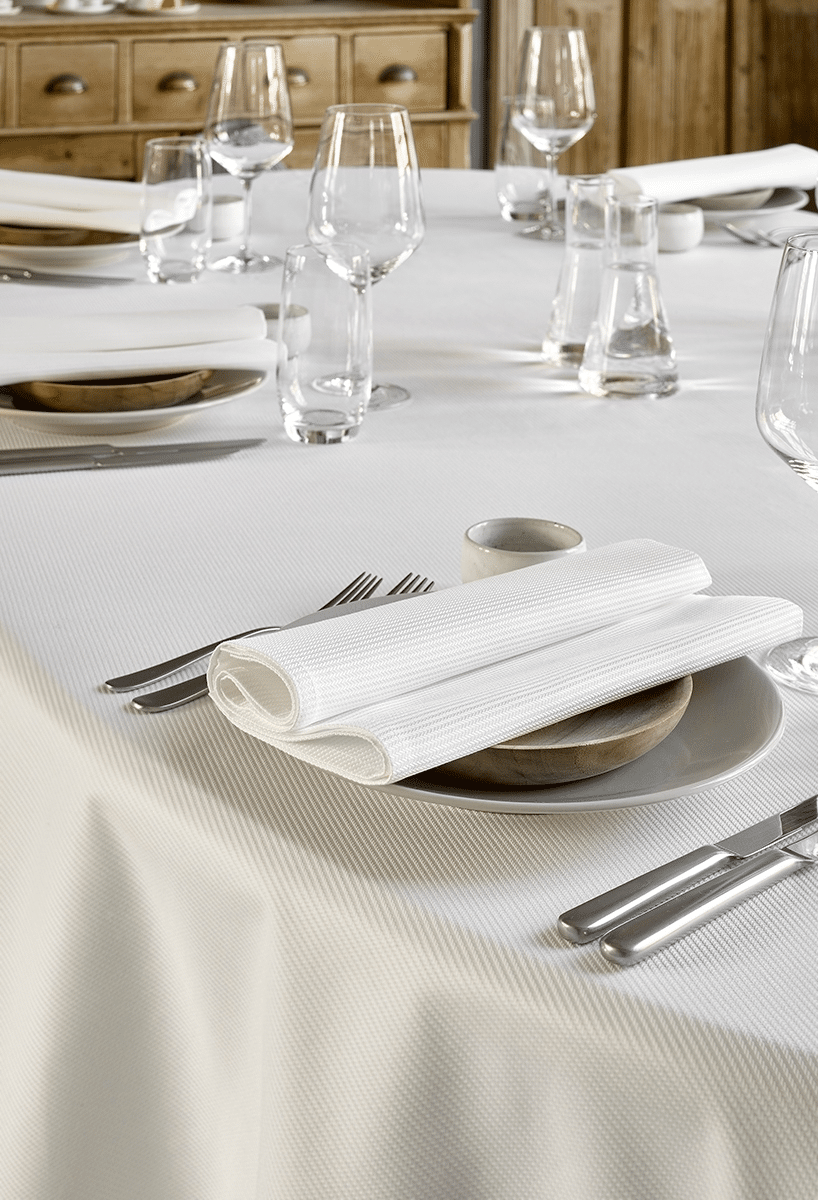
“To tap into current trends, we are also strongly focusing on personalisation. This allows us to weave logos or motifs into a base colour of your choice. This works excellently for tablecloths. For napkins, if the warp is white, you can personalise with a different colour for volumes of around one hundred pieces. For other colours, this is possible when you stay within the same colour as the warp.”
“For napkins, fine polyester embroidery is also a very frequent choice. This looks luxurious and does not require large volumes. You can also offer variety with weaving techniques. The use of specific weaves gives the linen a relief or a rougher appearance, which, for example, matches the authentic look of flax.”
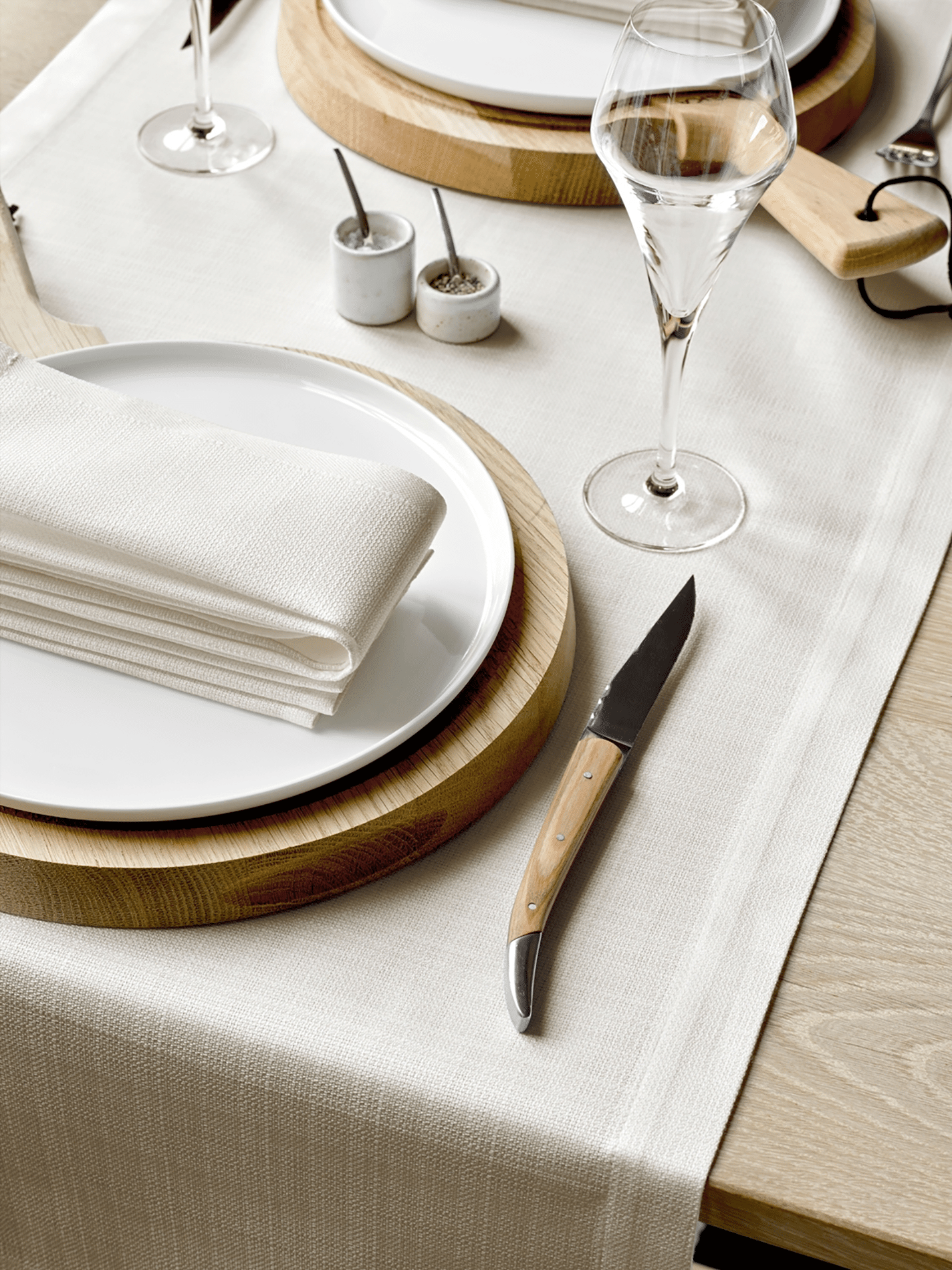
“Today, sleek lines are clearly preferred. Logos and motifs are generally understated and simple. Checked and classic patterns are less popular, except in businesses that intentionally want to project a traditional character. In terms of colours, we're mainly seeing a demand for light shades. Beige is currently very much in vogue. Darker colours remain popular in other applications, such as bath linen. In short, tablecloths retain all their advantages for the catering industry.
Neem dan rechtstreeks contact op met De Witte Lietaer.
 Contact opnemen
De Witte Lietaer has been the expert in hotel and household linen since 1898. Thanks to our many years of experience and know-how, we consistently deliver quality textiles, produced with attention to detail and developed using the most sustainable materials. Hotels & Restaurants You'll find bed, bath, and table linen from De Witte Lietaer in selected hotels and restaurants […]
Bekijk Bedrijfsprofiel