hotelvak.be
EN

Platform on hotel management, interior design and design in Flanders
Door: Emine Youssef, Director Hospitality Western Europe, Lightspeed.
The hospitality sector has been at the heart of a digital revolution for years. Reservation systems, till software, inventory management, and payment solutions: data is everywhere. Yet, one problem stubbornly persists. Because although entrepreneurs have more and more figures at their disposal, finding the right insights often remains time-consuming and complex.
There now seems to be a change in this. With AI, the focus is less on collecting data and more on understanding, interpreting and converting it into concrete actions.

A survey by Lightspeed of 200 hospitality business owners in Belgium shows that technology is now firmly established in the sector. For example, 39% uses wireless payment terminals, 46% use smartphones to take orders, 46% use booking apps, 58% use QR menus and 42% use kitchen displays. Business intelligence tools and analytics dashboards are also on the rise: 26% of hospitality business owners use these.
More than a quarter (26%) of hospitality business owners now say they use AI tools in their work. This shows that AI is rapidly gaining ground, but at the same time is still at a relatively early stage.
The challenge for entrepreneurs lies not in collecting data, but in translating it into concrete actions. Many hospitality entrepreneurs recognise this: there are plenty of reports and dashboards, but it takes time to establish the right connections.
AI plays a role precisely at that point. Where reports primarily show historical data, AI helps to identify patterns more quickly, answer questions and make recommendations.
Not as a replacement for the entrepreneur, therefore, but as a digital assistant that helps with processing information and making sharper choices in offering and planning.
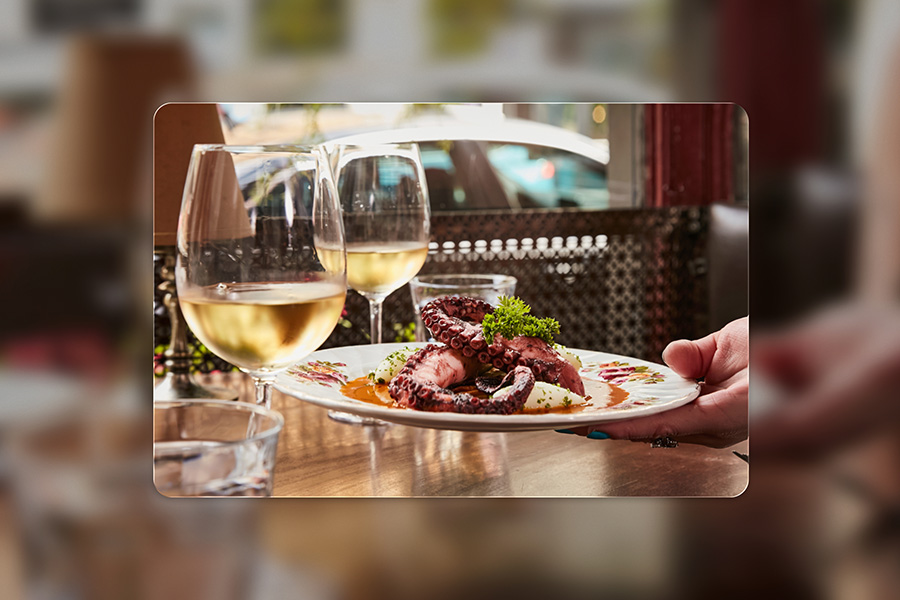
In practice, we see that hospitality entrepreneurs are increasingly using AI for all sorts of tasks; think of writing marketing copy, analysing margins, or optimising menus. Staff scheduling and inventory management can also benefit from better forecasts.
Yet, there often remains a gap between potential and usage. AI tools are frequently disconnected from existing systems, meaning entrepreneurs still have to switch between different platforms. And that is a significant bottleneck in a sector where speed is crucial.
This is why development is now shifting towards integrated AI solutions. Instead of standalone tools, AI is increasingly being built directly into existing systems, such as the checkout platform.
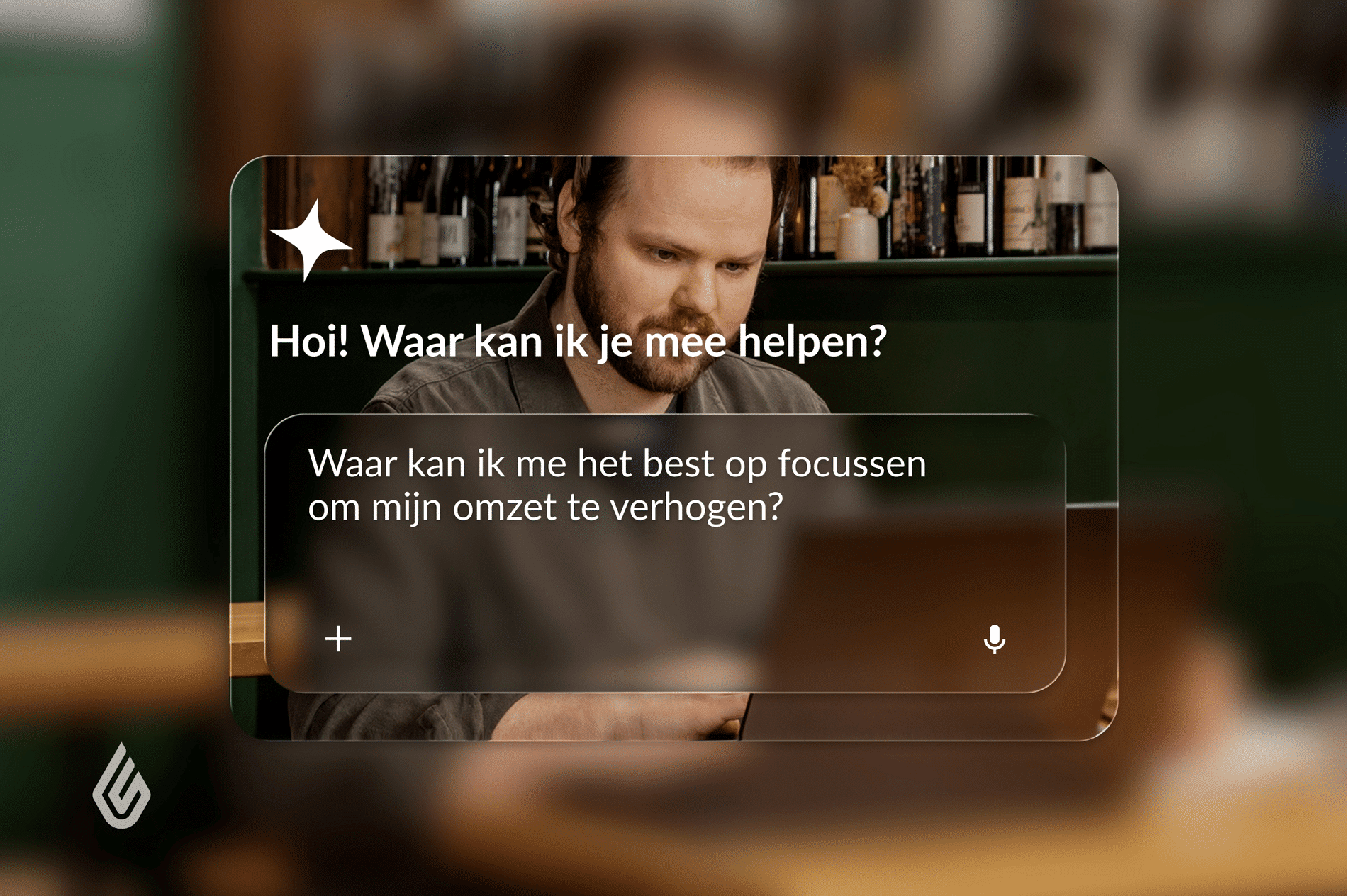
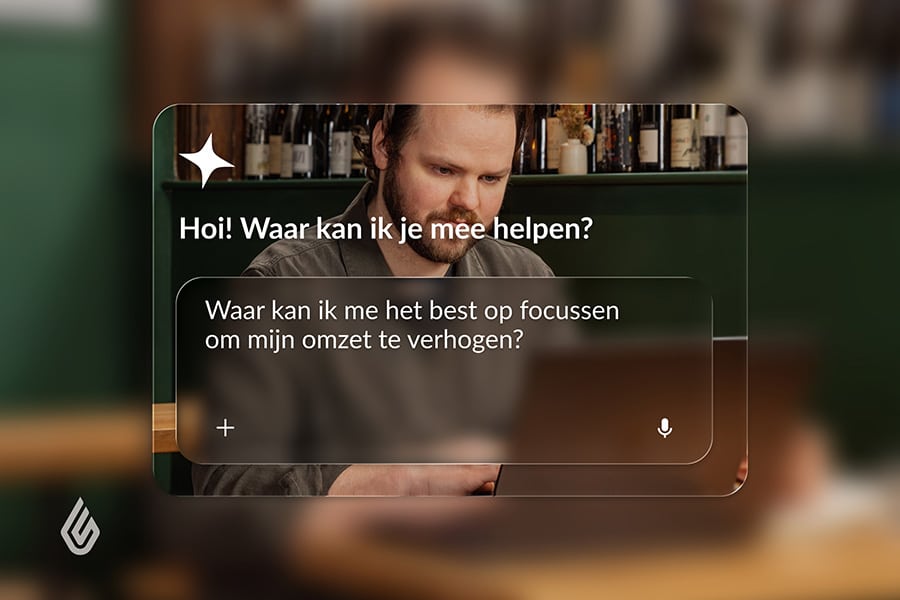
A recent development is LightspeedAI, An AI layer within the till system that allows hospitality businesses to ask questions about their own data in plain English. Instead of ploughing through reports, they get direct answers to questions such as: ‘which dishes generated the most margin this month’, or ‘why was turnover lower yesterday?’.
So the difference is mainly in speed and accessibility. By directly converting data into understandable insights, it becomes easier to make adjustments even during a shift, rather than analysing afterwards.
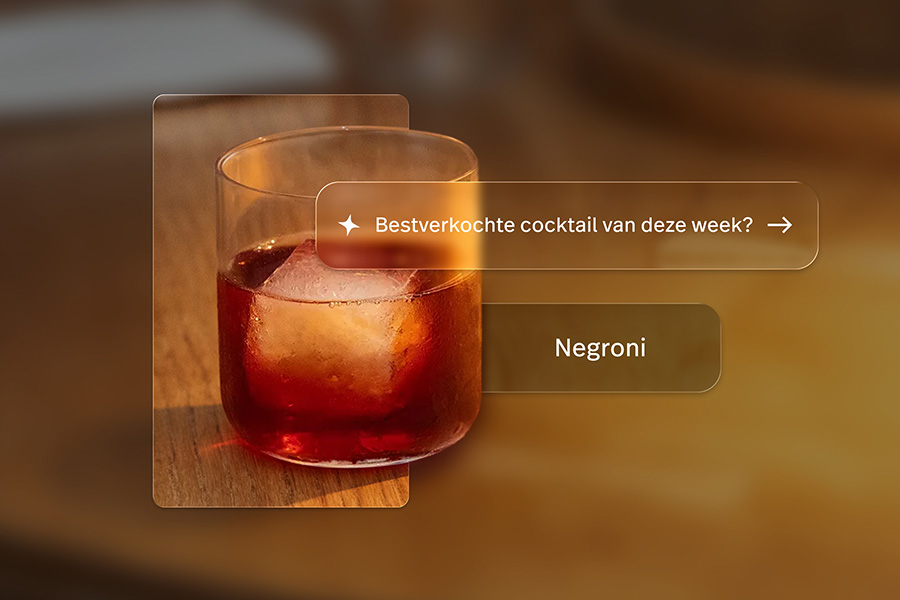
AI is changing the way entrepreneurs work with data. Not by providing more figures, but by making the right insights immediately available.
This also calls for a different way of working. Entrepreneurs who successfully use AI do not use it as a replacement, but as an extension of their own expertise.
It is expected that AI will continue to evolve from a tool into a system that provides suggestions for running their business and discovering new opportunities.
For hospitality entrepreneurs, that means one thing: anyone who learns to manage different AI tools now is laying the foundation for smarter work with data. Because the data was already there. Only the insight is finally within reach now.
Neem dan rechtstreeks contact op met Lightspeed Commerce.
 Contact opnemen

With Lightspeed's advanced platform, global entrepreneurs can simplify their workflow, scale up and offer exceptional experiences to their customers. Lightspeed's POS system is designed for hospitality entrepreneurs with ambition. We give entrepreneurs the tools they need to challenge the status quo. Lightspeed Restaurant Lightspeed's complete entrepreneurial platform enables global hospitality entrepreneurs to [...]
Bekijk Bedrijfsprofiel