hotelvak.be
EN

Platform on hotel management, interior design and design in Flanders
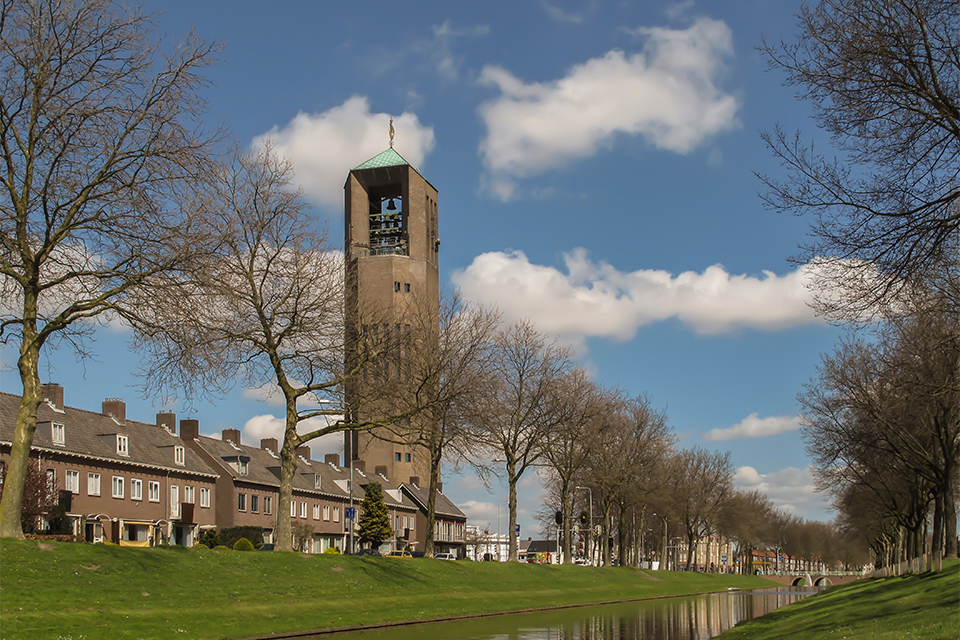
Those checking into the Poldertoren in Emmeloord aren't staying in a standard hotel, but in an icon. The former water tower, a landmark in the Noordoostpolder for years, has been transformed into a hospitality concept with six luxury suites. Inside, the focus isn't just on the view, but also on the building's unique structure: rounded shapes, visible constructions and rooms built around the former water basin.
For entrepreneur Twan Hakvoort, it was quickly clear that he needed a specialist for the interior design. His collaboration with ESTIDA dates back to 2013, when he took over his parents-in-law's hotel and grand café. “Other parties actually wanted to renew everything,” he explains. “Michel from ESTIDA said: don't throw everything away, otherwise you'll remove the soul from the business. I found that compelling. We've been working together ever since.”
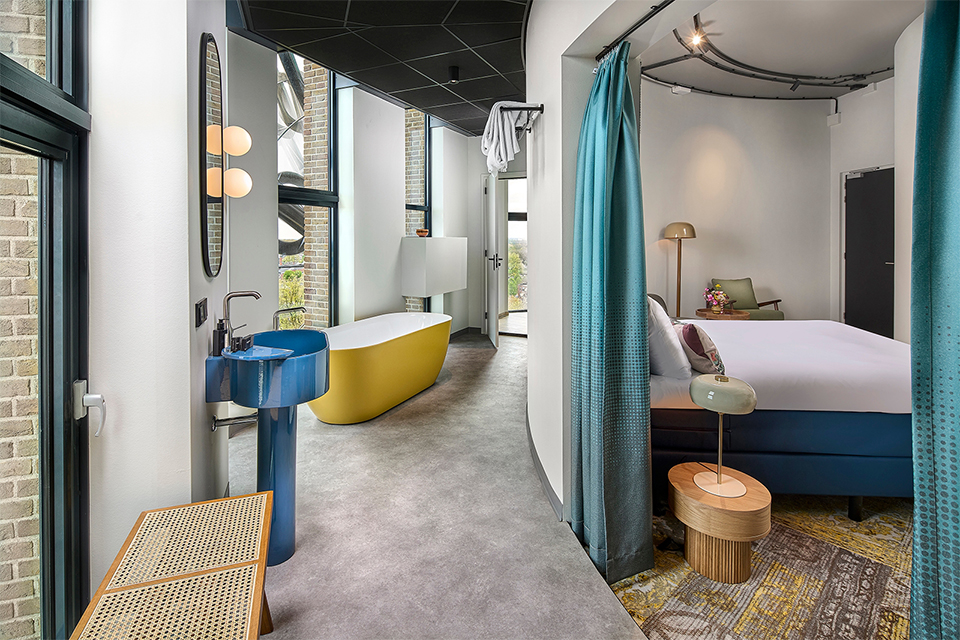
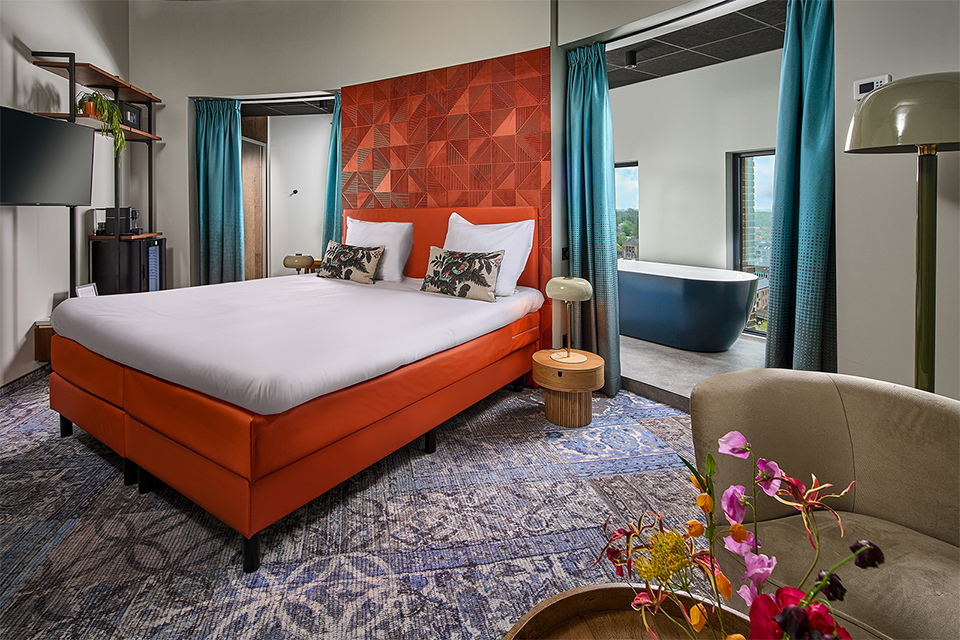
When the opportunity arose to redevelop the Poldertoren, ESTIDA came back into the picture. “I boldly declared: we can turn that into hotel rooms. But a monumental water tower isn't an easy building. The exterior is hexagonal, inside there's a round water tank, and nothing is straight. I knew straight away: I'll sell cups of coffee, for this project I need
have ESTIDA.”
According to Hakvoort, the project wasn't just about the unique location. “It was about sleeping in an icon, but it also had to stay warm. Not a soulless designer room that could just as easily have been in Amsterdam or Berlin.”
The existing structure was the starting point for the design at ESTIDA. “Don't hide what you have”, says Ruth van Toledo, Director of Design & Development at ESTIDA. “The concrete, the construction and the pool give the building character. Furthermore, embracing the characteristic features of the property also has many advantages, including financial ones.”
At the same time, this design brought with it all sorts of practical challenges. Climate systems, lighting, and technology had to be integrated into a monumental, circular structure. “Where do you put switches in a round hotel room? Those are things that are normally taken for granted,” says Hakvoort. “In the end, they made a sort of cocoon out of the water tank. You sleep very cosily in the middle, while the outer ring remains open.”
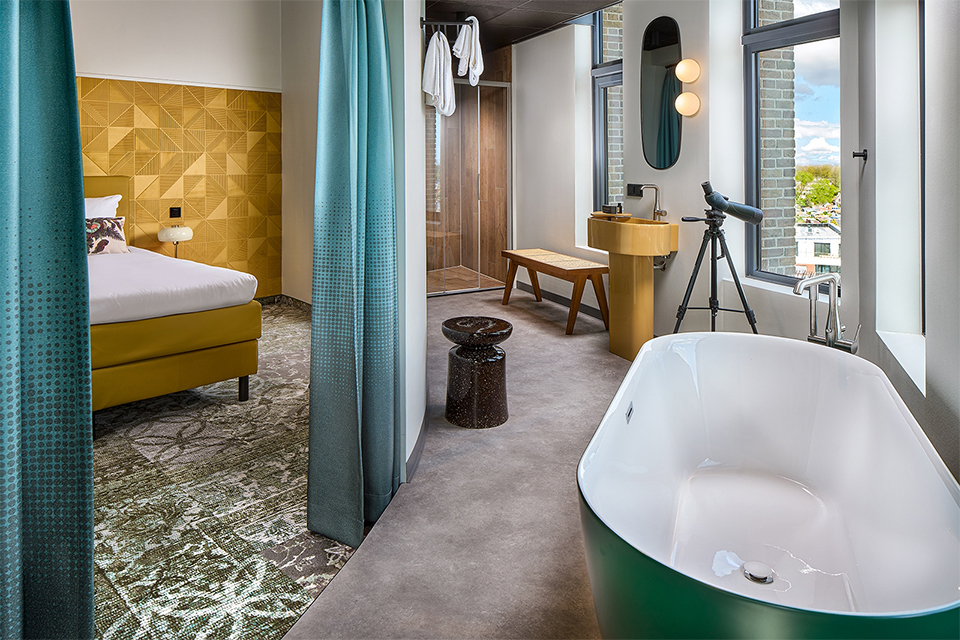
ESTIDA opted for colour blocking, strong material contrasts and loose objects with ample scale. “In a space like this, grand gestures work better than small interventions,” says Van Toledo. “At the same time, we sought a balance between hard, monumental elements and warmth, with fabrics, patterns and carpeting.”
The layout also follows the guest's experience. “Bathrooms and seating areas are located in almost every room on the outer ring, so you experience the view and daylight there,” Van Toledo explains. “You can enjoy the view while bathing in coloured, freestanding tubs. Sleeping occurs more towards the core, which can be closed off with blackout curtains, creating a more intimate atmosphere.”
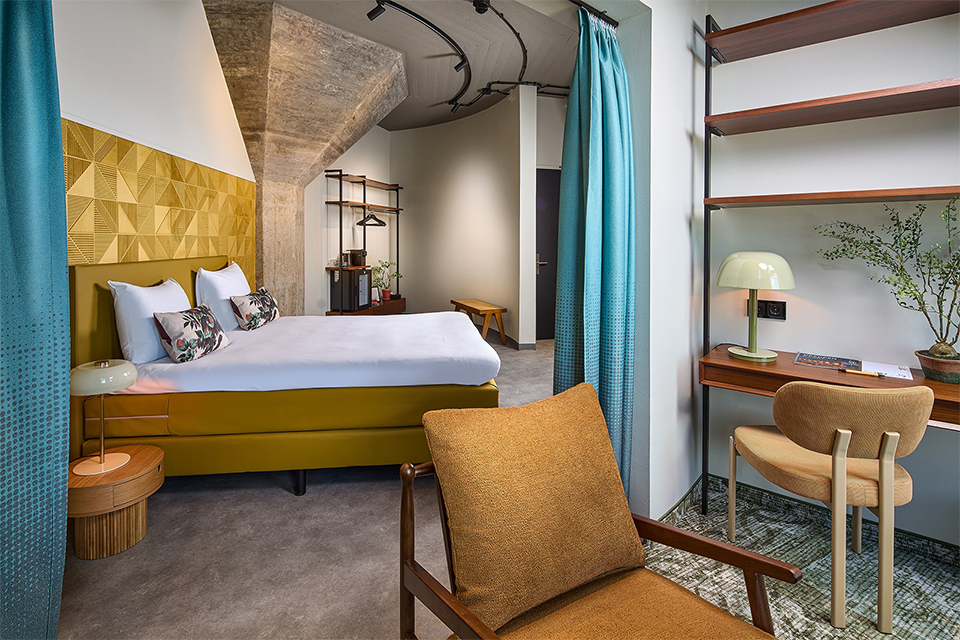
During construction, the bold choices weren't immediately recognisable to everyone. Hakvoort laughs: “Installers saw a green foundation and yellow wallpaper and wondered what kind of dolls” house this was going to be.“ Yet, that doubt disappeared when everything came together. ‘A painter who works with ESTIDA more often said: every time I think ’is this mixed correctly?”, but in the end, the overall picture is always right.”
Visitors also react strongly to that combination, according to Hakvoort. Around 3,500 people came to see it during open days. “Of course, people look outside first, but then they focus on the design and colours. That interplay makes the rooms unique.”