hotelvak.be
EN

Platform on hotel management, interior design and design in Flanders
From one week to one day of work
In a hotel, everything revolves around timing. From breakfast service to night shifts, from events to restaurant busyness: staff scheduling is a complex puzzle that needs to be put together anew every day. At Van der Valk Gent, this challenge became particularly tangible a few years ago. Since 2023, the hotel has therefore been working with the staff scheduling and time registration platform Strobbo. This has drastically changed the way the hotel organises its staff management.
“When I started here in 2023, we were working with various systems that didn't communicate with each other,” says Laure De Winde, HR manager at Van der Valk Gent. “That led to an enormous amount of manual work and a large margin for error.”
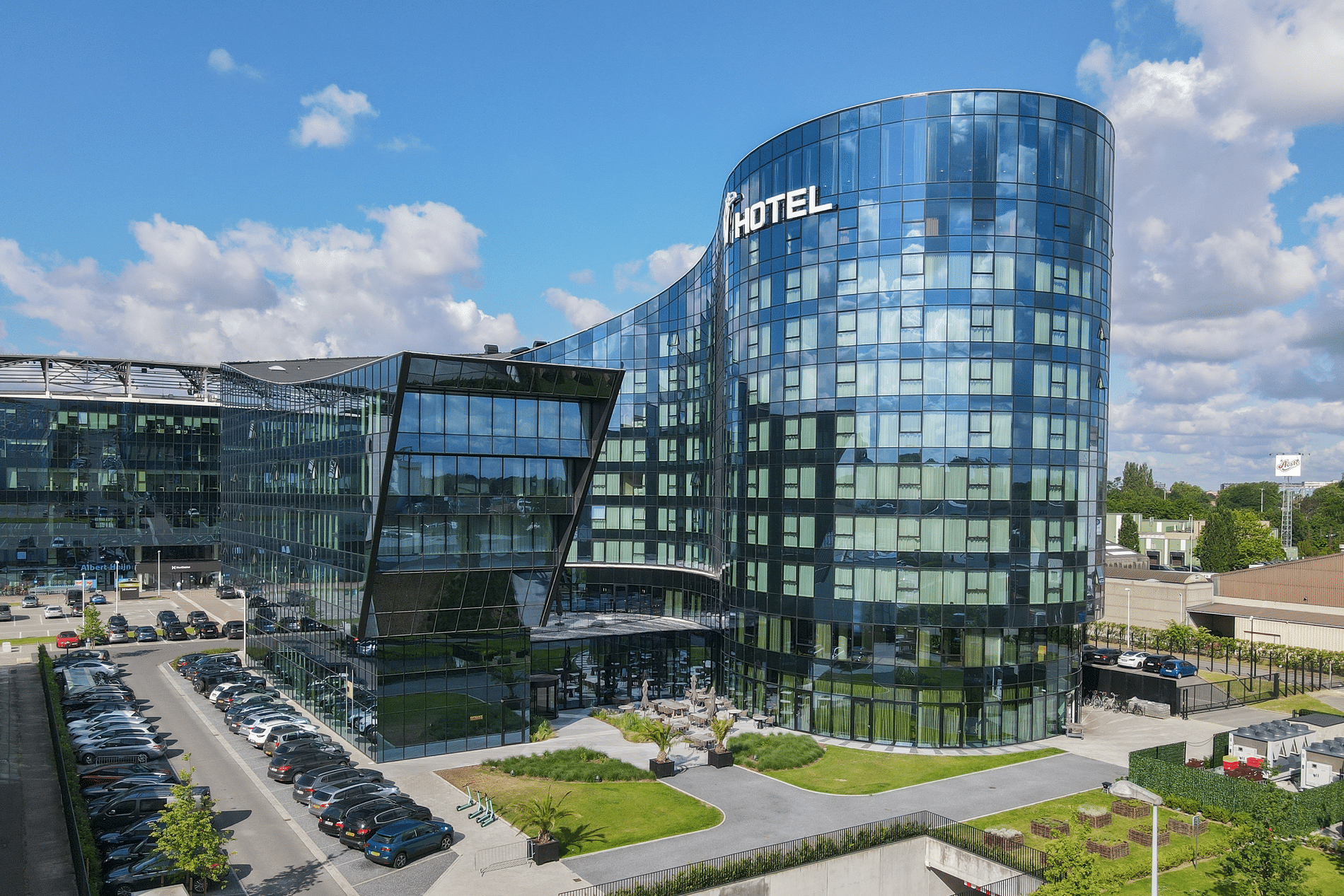
The size of the workforce makes the challenge clear. The hotel has approximately 160 permanent employees, supplemented by 300 to 400 daily contracts per month for flexi-jobbers and temporary staff. “A hotel is a 24/7 business,” says De Winde. “People work at all possible times. That makes planning and administration extremely complex.” Before the introduction of the new system, this also meant that a lot of data had to be processed manually. Payroll processing at the end of the month, in particular, led to stressful moments: “I literally had to manually retype all the hours worked for hundreds of employees. Those were truly sleepless nights.”
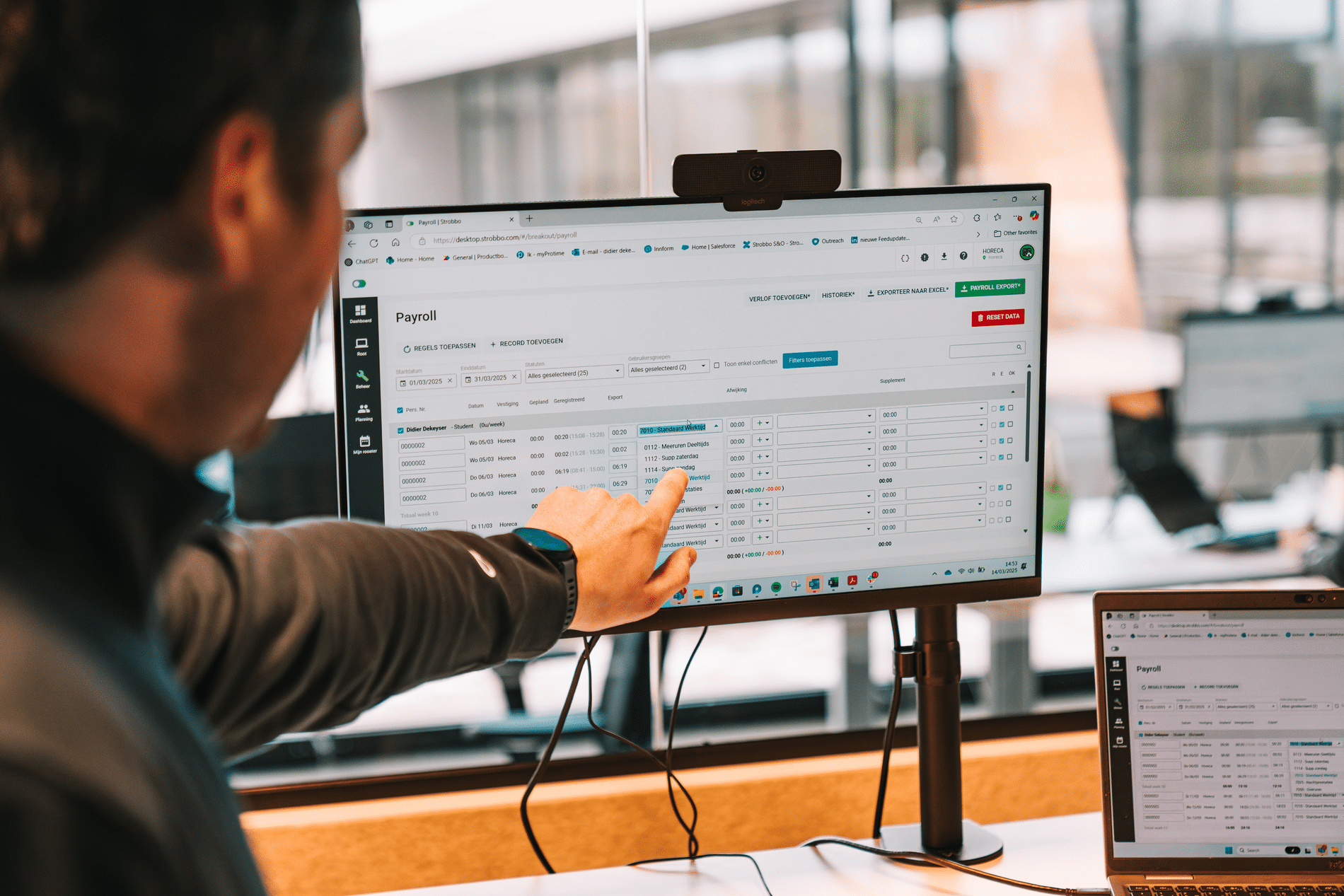
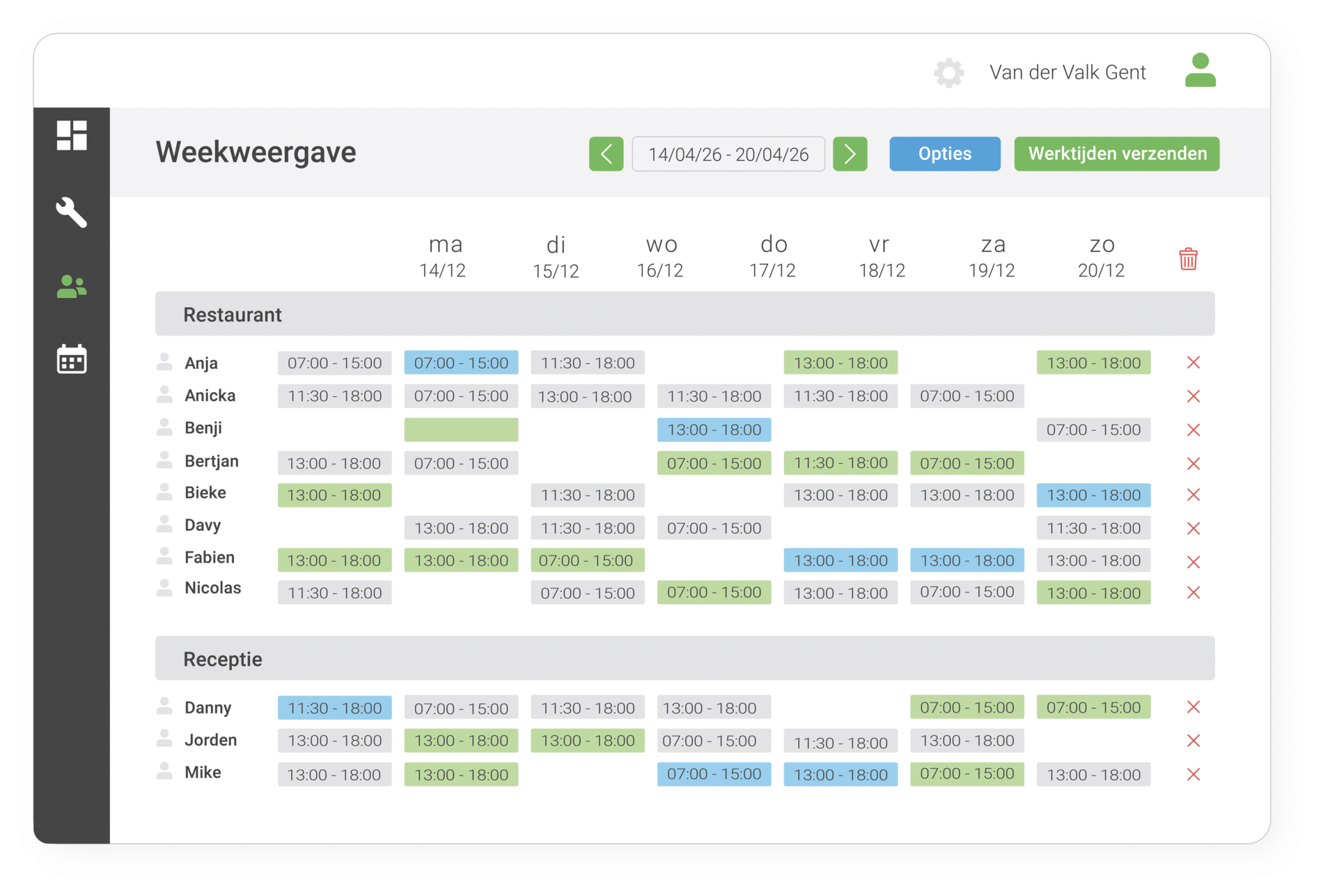
The solution came with Strobbo, which automates staff scheduling and time tracking and links directly to the social secretariat SD Worx. This means that scheduling, time tracking, and payroll administration are seamlessly connected. The result is a huge time saving. “Where payroll processing previously took about a week, we now do it in one day,” says De Winde. “That makes a huge difference.”
The compulsory Dimona declarations also run automatically via Strobbo. This makes administrative errors much less likely and allows HR managers to focus more on their core tasks.
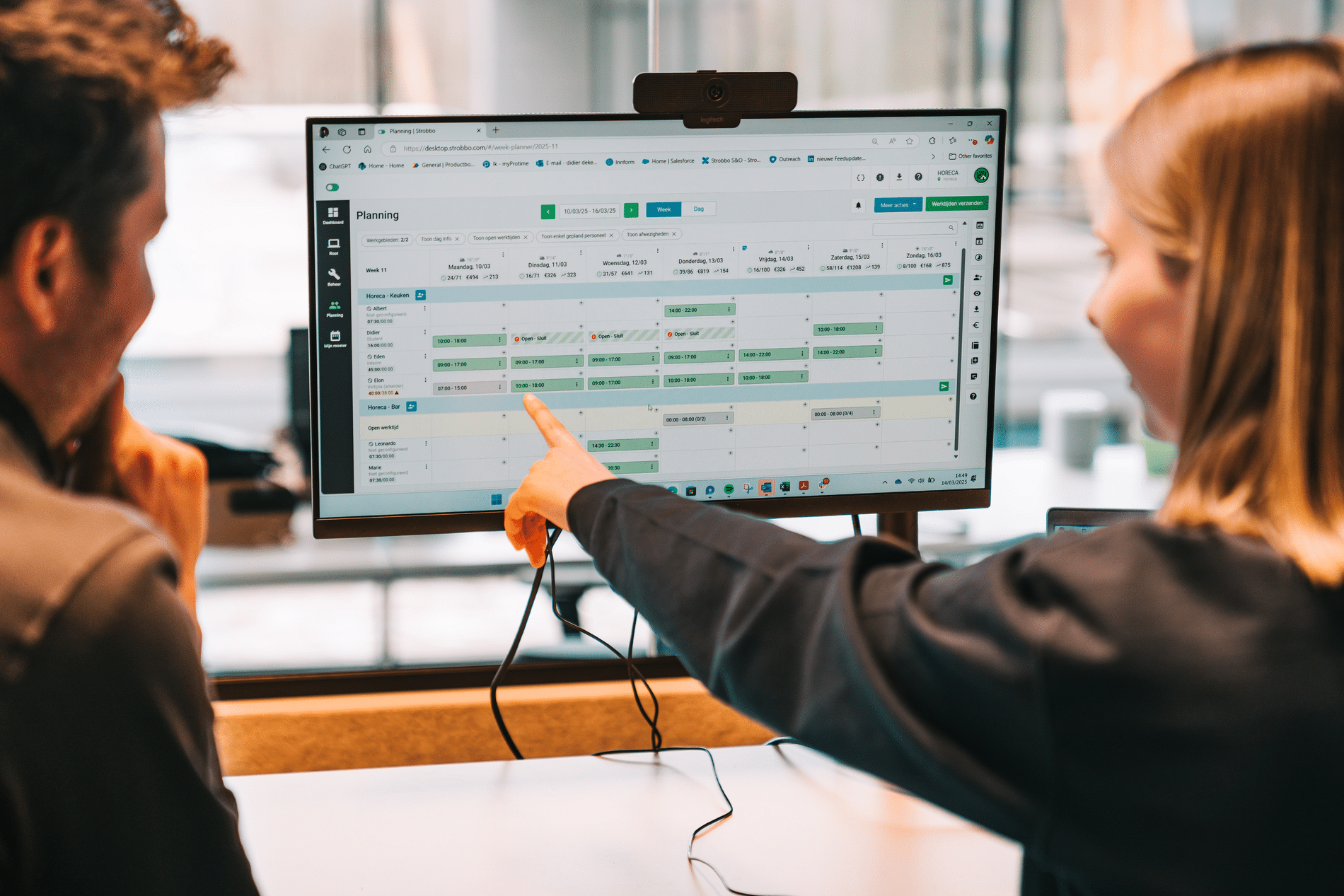
Flexibility is essential in the hospitality sector. Last-minute changes, sickness, or unexpected busy periods are daily realities. According to De Winde, the system helps to respond to these more quickly: “If someone drops out at the last minute and a replacement comes to work, they can register immediately in Strobbo. The declaration to social security happens automatically, even if I am not present myself.”
Furthermore, the employees themselves play an active role. Flexi-jobbers and temporary staff can indicate their availability in the system, after which planners can immediately see who is deployable. In addition, the hotel can also send out ‘open shifts’ to employees when extra staff are unexpectedly needed: “Then we essentially send out a call to everyone registered in the relevant department. People can then indicate themselves whether or not they want to take on that shift.”
In addition to planning and administration, the platform also provides insights through dashboards and reports. For example, managers can see how many hours were scheduled, how many were actually worked, and the level of absenteeism. “Managers can view this per department, while I can monitor it at the company level,” explains De Winde.
The insights help to better understand where peaks and troughs are in staffing levels. Nevertheless, planning in a hotel environment remains partly unpredictable. “We have a kind of fixed basic staffing, but in addition, there are always peaks. Think of events, sports teams or large groups staying here. That creates extra dynamism in the planning.”
Although efficiency is important, the well-being of employees remains a priority within the organisation. “Work-life balance is very important to us,” says De Winde. “People can indicate when they have, for example, a family celebration or a day off. We then try to take that into account.”
According to her, the digitalisation of personnel planning shows how technology can enhance the daily operations of a hotel. “Strobbo gives us peace of mind and an overview,” concludes De Winde. “We can react faster and still work correctly.”