hotelvak.be
EN

Platform on hotel management, interior design and design in Flanders
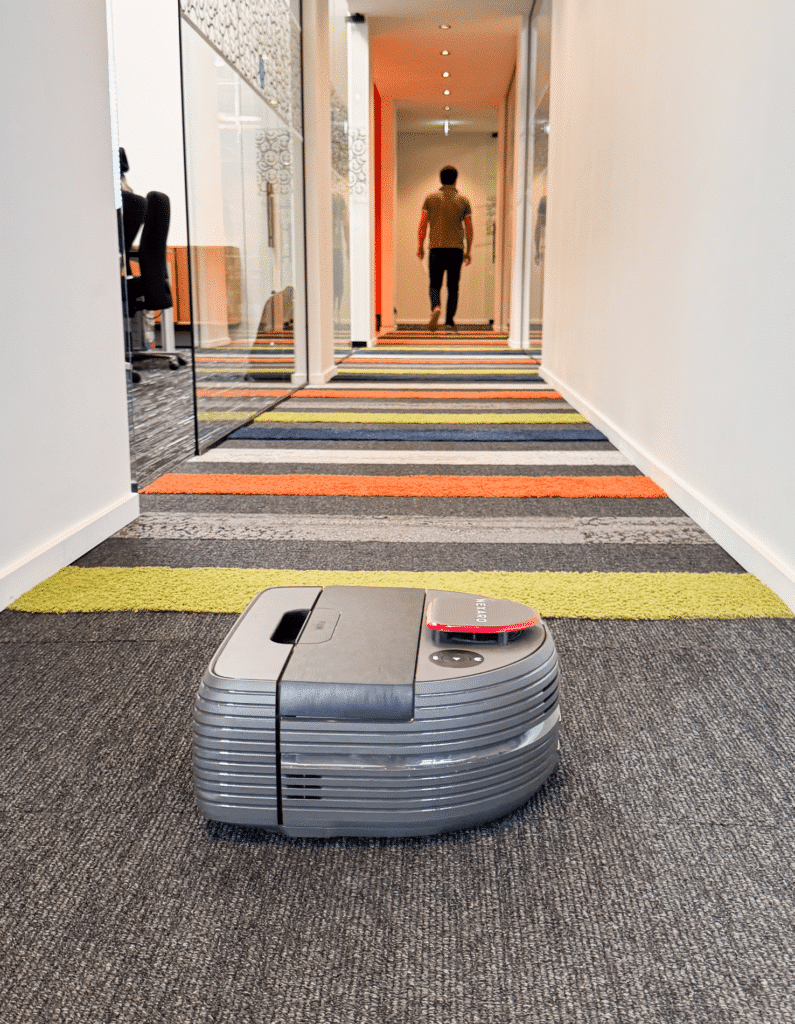
From a well-maintained lobby to dust-free corridors: guests expect a hotel to look tidy at any time of day. Meeting that expectation demands increasing flexibility from housekeeping teams. That's why interest is growing in smart technology that can take over repetitive tasks. Robot vacuum cleaners are also gradually finding their way into the hotel sector. Not as a replacement for staff, but as additional support on the shop floor.
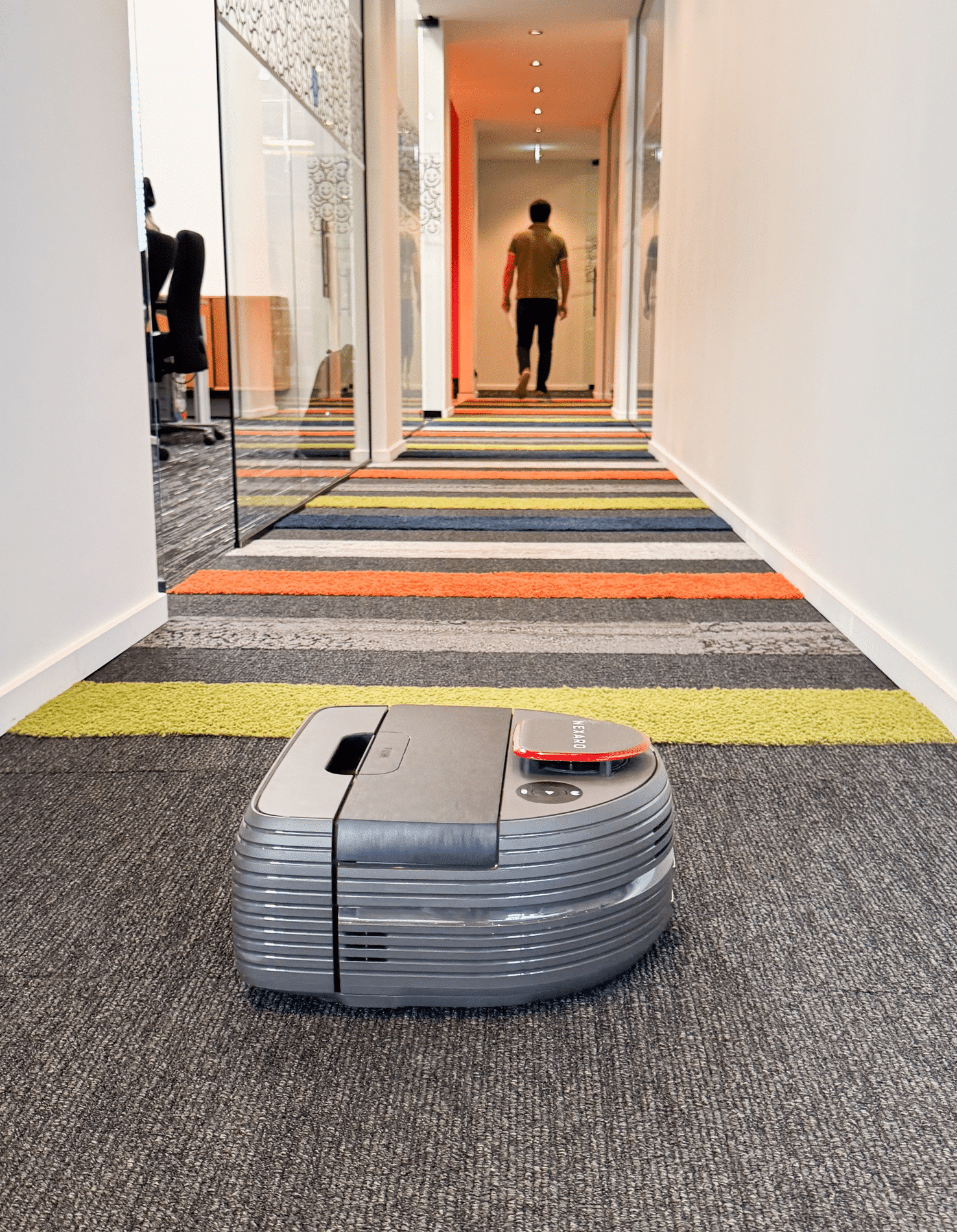
Evolution does not go unnoticed at Group-f either. With robot vacuum cleaners from Nexaro, the company is adding a new technology to its services. The devices take over repetitive vacuuming tasks in selected hotel zones and are responsible for additional maintenance moments throughout the day. This way, the environment remains well-kept for longer, without operations becoming unnecessarily difficult or expensive.
“The aim is not to replace people, but to increase the level of service in a smart and sustainable way,” says Stefanie Van Steenlandt, Quality & Education Manager at Group-f. “Robot vacuum cleaners take over routine work. This gives the housekeeping team more room for checks, detailed work, and finishing. In short, tasks where human attention makes the difference.”
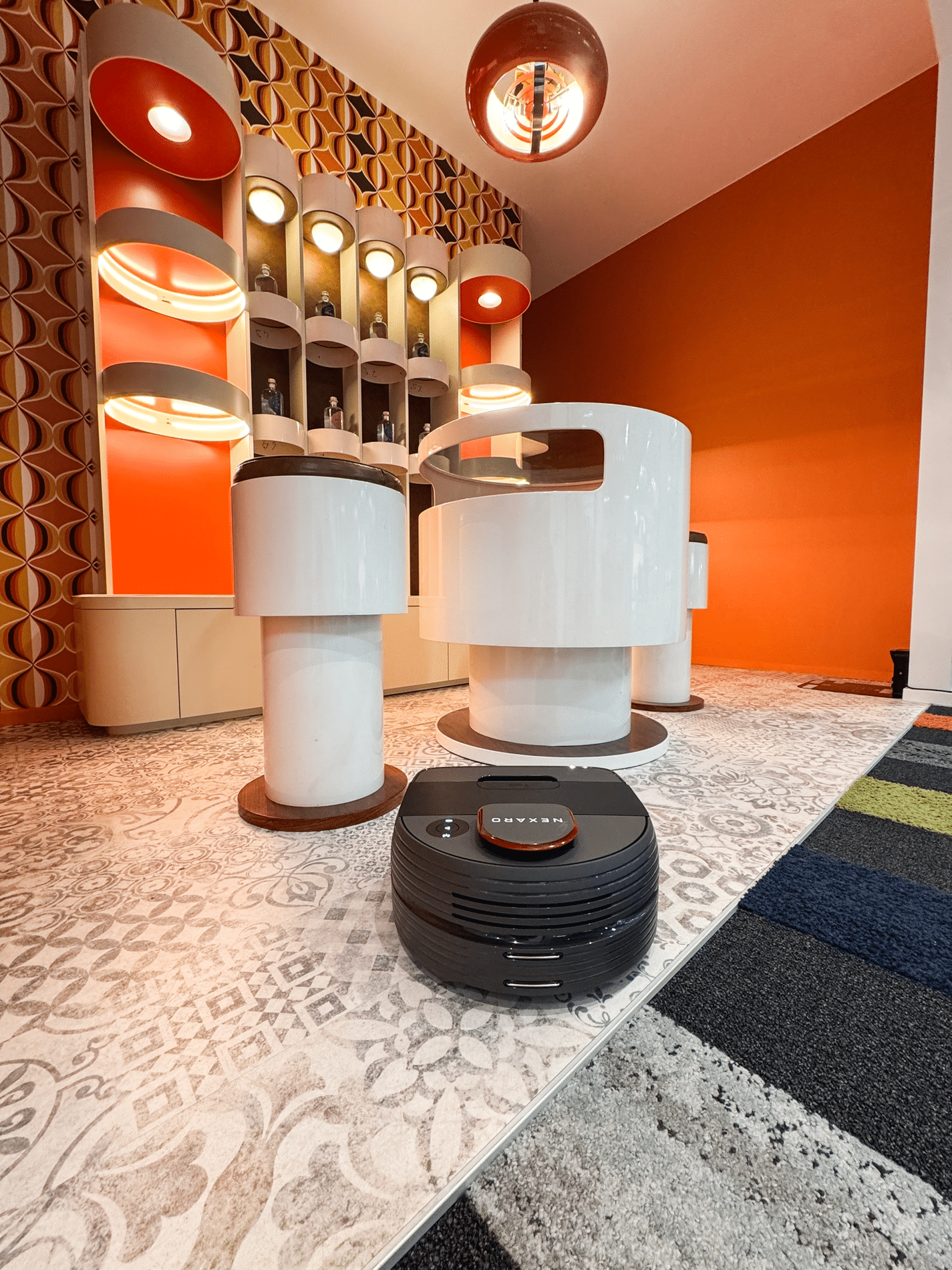
In hotels, the guest experience plays a significant role. Guests will immediately notice if an entrance hall, corridor, or restaurant area feels well-maintained. This is precisely why robot vacuums are of interest for high-traffic areas. They complete their rounds at fixed times, thereby supporting a consistent cleaning standard.
“A staff member usually vacuums a room at a certain time of day. A robot vacuum cleaner makes it possible to maintain the same area multiple times without disrupting daily operations,” explains Van Steenlandt. “Dust, hair, and visible dirt have less chance to accumulate. The result is a hotel environment that remains fresh and presentable for longer.”
The use of robots is part of a broader evolution in professional cleaning. Technology is increasingly being deployed to organise repetitive tasks more efficiently. This helps hotels to maintain their service level, even when operating costs are rising.
“Hotels want to offer their guests consistent quality. At the same time, they have to keep their organisation affordable and workable,” says Van Steenlandt. “Smart technology helps to monitor that balance better. You increase the number of cleaning instances without always needing extra manual effort.”
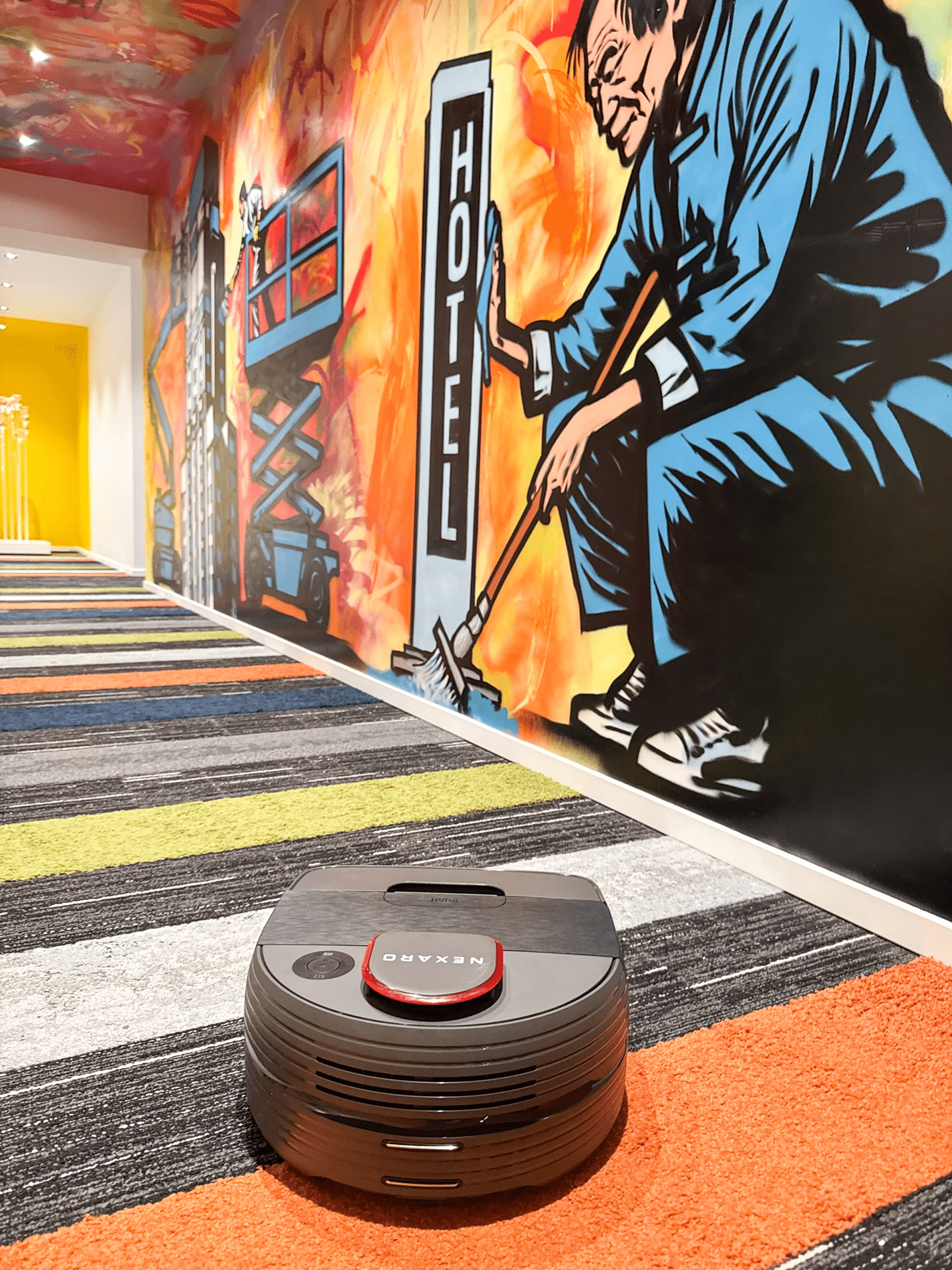
Group-f does not include just any device in its services. Each robot vacuum cleaner is assessed for performance, reliability, noise level, ease of use, energy consumption, and durability. Only when a device meets the operational requirements of a hotel environment is it eligible for deployment with customers.
“A robot must not only perform well technically, it must also fit into the reality of a hotel,” emphasises Van Steenlandt. “Think of changing occupancy, peak times, furniture, carpets, cable zones, and guests moving around the building. Reliability in that context is essential for us.”
The selected Nexaro robots first map the spaces with precision. During this mapping, areas that are not suitable for the robot are excluded or marked in advance. Think of complex corners, cable areas, narrow passageways or other points of risk. This allows the robot to work independently within clearly defined zones.
“The preparation is crucial,” says Van Steenlandt. “A robot only works well when the environment is set up correctly. By excluding difficult zones in the mapping beforehand, you increase reliability and avoid unnecessary interruptions.”
When choosing robot technology, Group-f not only looks at performance, but also at privacy and use in a hotel environment. The robot range that Group-f works with today is not equipped with cameras or microphones. This is a conscious choice.
“In a hotel setting, you want technology that works efficiently but also remains discreet,” says Van Steenlandt. “Our robots navigate without image or sound recordings. This makes their deployment simpler, more transparent and better suited to an environment where guests, staff and privacy are paramount.”
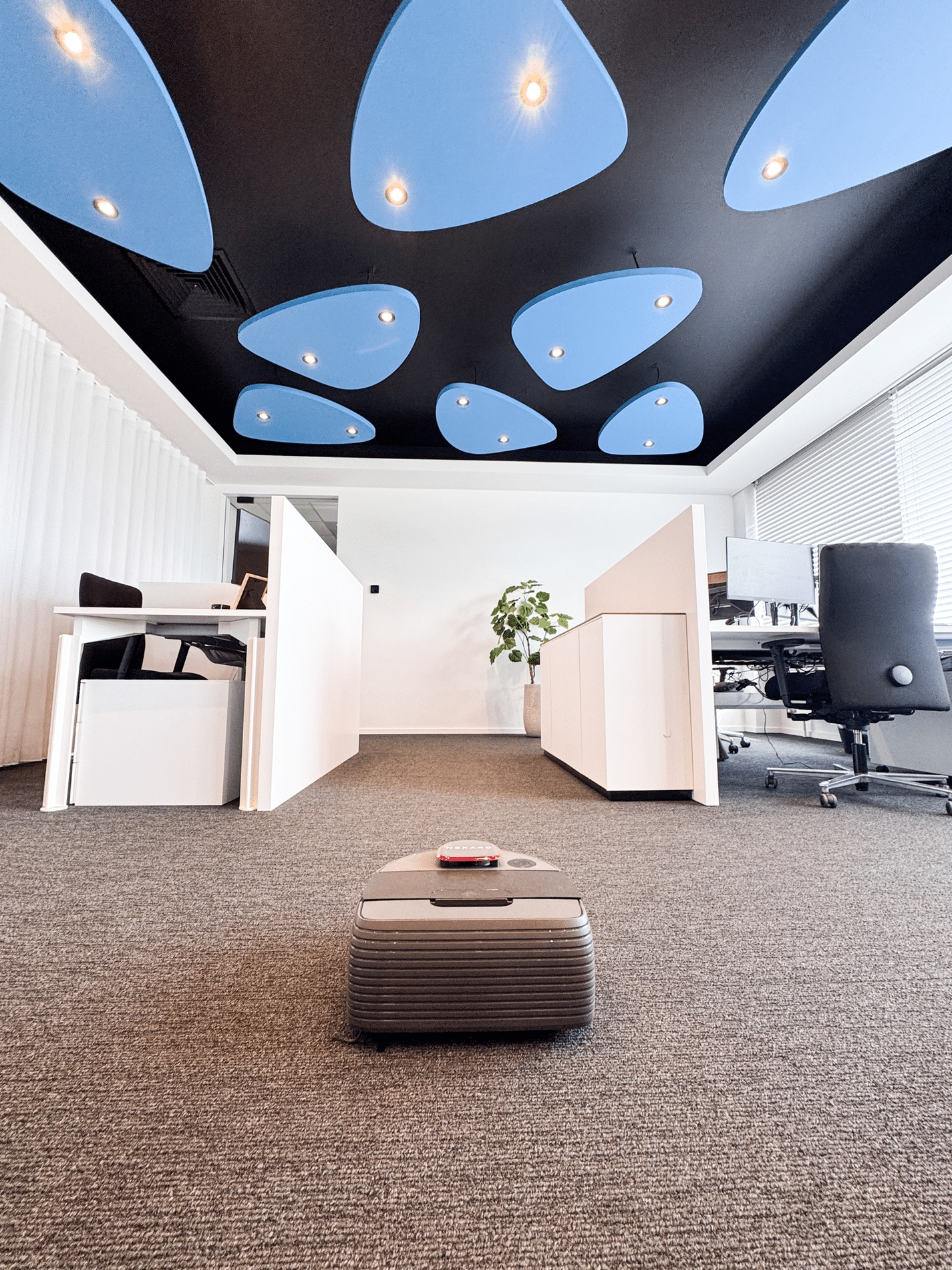
On the shop floor, robots are primarily seen as a support. They take over predictable and repetitive tasks, while employees focus on aspects that cannot be automated: visual inspection, detailed cleaning, fine-tuning, customer-facing situations and quality control.
“The robot offers regularity. The employee guarantees insight, finishing and quality,” Van Steenlandt summarises. “That combination makes the difference. Technology takes on the routine work, but the final quality remains human work.”
In various teams, the appliances are even spontaneously given a nickname. This shows how quickly the robots are finding their place within daily operations. Not as a replacement, but as an additional link in a professional cleaning approach.
For hotels, this means improved cleaning continuity, greater organisational flexibility, and visible added value for guests. The space stays cleaner for longer, the housekeeping team works more efficiently, and the cleaning standard is better monitored throughout the day.
Perfection is what your guests expect. We deliver that. Every single day! A hotel is so much more than a place to stay. It is an experience. At Group-f Cleaning & Hospitality, we make sure your guests have an unforgettable first impression when they step into their spotless room. We strive for perfection in cleaning [...]
Bekijk Bedrijfsprofiel